



Best Dog Harness for German Shepherd: Fit and Control Guide
If you're shopping for your German Shepherd, the best harness you can pick is a padded one that adjusts at both the neck and the chest, with a leash ring on the front as well as the back. You'll clip the leash to the front ring when your dog pulls and use the back ring for relaxed walks, and either way, you're keeping the pressure off their throat.
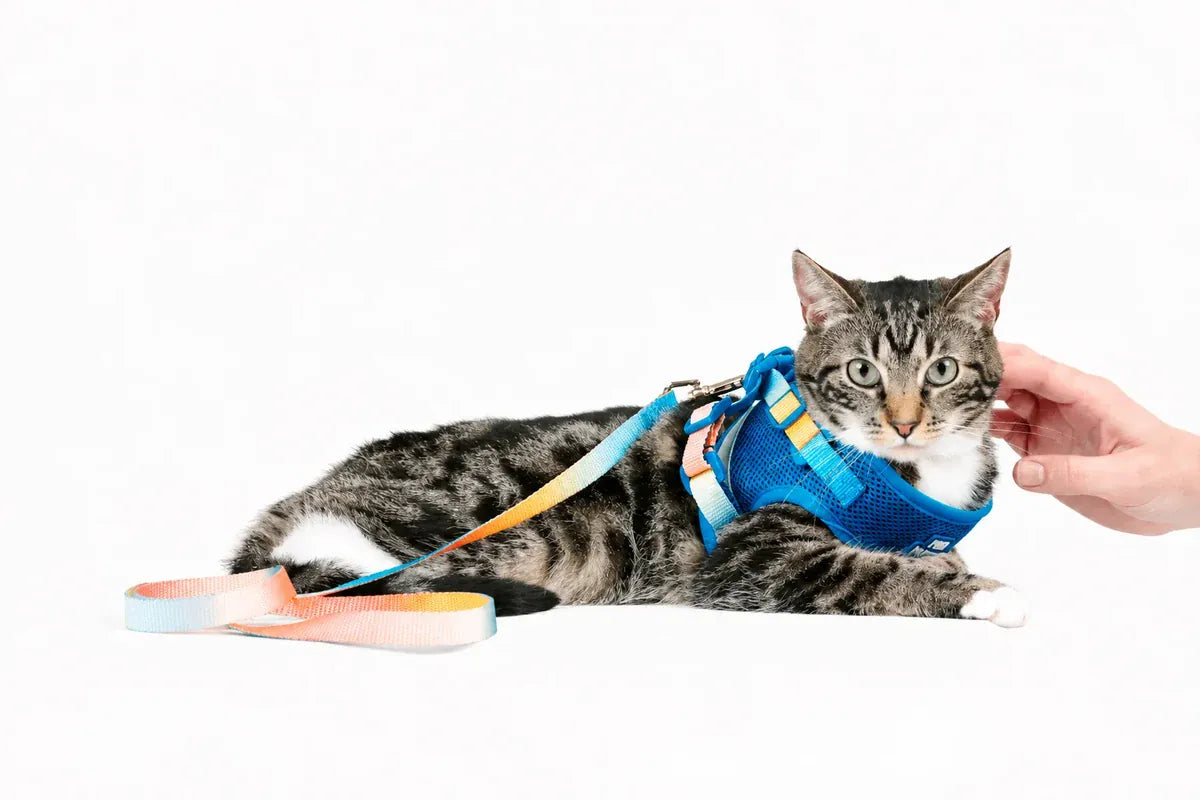
We know how much dog you've got on the other end of that leash. A German Shepherd has a deep chest and strong shoulders under a thick double coat, so a harness that doesn't fit that build can slide off center and rub under their front legs, and when they lunge, it can ride up onto their neck. We designed our harnesses to buckle at the neck and the body, so you'll never have to wrestle one over your dog's head, and with a dog this size, you'll be glad of that.
What this article covers
Key Construction Features for Deep-Chested Dogs
Your German Shepherd can throw their whole weight into a leash, so start with how the harness is built. Look for wide, padded straps rather than thin webbing, because narrow straps press into the skin under a thick coat and leave sore spots after a long walk. We make ours from soft neoprene that sits flat against a double coat instead of digging in.
Then check the shoulders. Vets suggest looking for an H-style or Y-style harness, where the straps form an H or a Y across the chest, with nothing crossing the front of the shoulder. That leaves your dog's front legs free to swing. Watch out here, because some no-pull harnesses press right on the shoulder joint, and over time that can hurt your dog. Run a hand under the chest strap while your dog walks, and if it catches on the point of the shoulder, look for a different shape.
You'll also be using this harness a lot. The AKC says German Shepherds need physical and mental exercise every day, so yours will cover plenty of miles on pavement and trails. Check the hardware before you buy, especially the leash rings. Our large dog harnesses use coated carbon steel D-rings, which is what you want on a dog who can pull you off balance.
We'd pick a harness with a handle on the back, too. When you're passing a cyclist or crossing a busy road, you can take hold of the handle and keep your dog at your side, instead of grabbing their collar or hauling on the leash. Every one of our dog harnesses with handles has one built in.

Step-by-Step Fitting Sequence for a German Shepherd
Before you order, get your dog's numbers. Our sizes go by chest and neck, and the large fits a chest of 26 to 38 inches and a neck of 17 to 22 inches. That covers most adult German Shepherds, though a big male can measure past it, so check your two numbers against the size guide on the product page before you pick a size.
Then fit it like this:
- Wrap a soft tape measure around the widest part of your dog's chest, just behind the front legs. Then measure their neck where the collar sits, and write both numbers down. You'll find the full method in our guide on measuring your dog's chest girth.
- Unbuckle the neck and the body straps, then put the harness on so that the chest panel sits flat against your dog's breastbone.
- Bring the belly strap up behind the front legs, about two inches back from the armpits, and snap each buckle shut.
- Even out the sliders on both sides until you can slide two flat fingers between the strap and your dog's coat.
Now walk your dog around the house for five minutes. Fur settles under the straps once they get moving, so a harness that felt snug while your dog stood still can loosen up on the move. If you see it sliding sideways or gaping anywhere, tighten the sliders again before you head out.

Managing Leash Pulling and Neck Comfort
If you're still walking your Shepherd on a collar, that's the first thing we'd change. When a dog this strong hits the end of the leash, a collar takes all of that force straight onto their throat, while a body harness puts far less pressure on their neck than a collar does. Vets recommend a harness for any dog with neck pain or a windpipe problem, and if your walks have a coughing fit in them, you'll notice the difference within a block.
Here's how we'd use the two rings. While your dog is still learning, clip the leash to the front ring, because when they surge ahead, the leash turns them back toward you instead of letting them lean into it. You'll find that front ring on all of our no-pull dog harnesses. Once your dog walks nicely beside you, move the leash to the back ring. For the moments when you want more control, like a parking lot or a narrow sidewalk, you can clip a double-ended leash to the front and back rings at the same time.
While you're at it, skip the choke chains, prong collars and shock collars. The same vets put those in the avoid column, because they work by hurting or frightening your dog into stopping. Reward your dog for walking beside your leg instead, and use a dog training harness while you're teaching them.
Different breeds need different shapes. If you've also got a Labrador at home, their broad chest changes the fit, and you'll find that in our guide to the best dog harness for Labs. A lighter, quicker working dog needs something else again, which we cover in our guide to the best harness for an Australian Cattle Dog.

Escape Resistance, Wear Checks, and Daily Care
A startled Shepherd can back out of a loose harness before you can react, so test yours in the yard or another fenced spot before you trust it on the street. Hold the leash, pull gently forward and down, and encourage your dog to step backward. If the neck opening starts to slide up toward their ears, tighten it and try again.
Take the harness off when you get home. A harness is walking kit, and vets say to leave it on only while your dog is on the leash, because a strap can hook on a crate door or a chair leg while you're in another room.
Once a week, go over the harness with your hands. Check the stitching around the rings and buckles, look for fraying, cracked hardware or grit worked into the padding, and replace the whole harness if a strap has gone thin. To clean ours, hand wash them in warm water with a mild soap, then towel them dry or leave them to air dry, and check that they're dry before the next walk.
When you're ready to choose, start with the tape measure. Take your dog's chest and neck, check both against the size guide, and pick a harness that leaves their shoulders free and gives you a handle to grab. That's how we designed our dog harnesses, and if your dog measures between two sizes, message us and we'll help you work it out.
Frequently asked questions
Can I Pick a Size From a German Shepherd Breed Chart?
We wouldn't. Two Shepherds of the same height can measure inches apart around the chest, and a heavy coat adds more on top of that. Measure your own dog's chest and neck, then match those two numbers to the size guide on the product page.
What If the Front Clip Makes the Harness Rotate?
Check the fit first. The chest panel should sit in the middle of your dog's breastbone, and the belly strap should sit about two inches behind their armpits. If it still twists after you've evened up the sliders on both sides, the shape isn't right for your dog's chest, so try another one. Don't fix it by tightening the neck, because that's how a harness ends up pressing on your dog's throat.
Does My German Shepherd Still Need a Collar?
Yes, for their ID tags. Walk them on the harness and leave the collar for identification, since that's where the tags belong and it keeps the pulling off their neck.
What If the Fit Changes After Grooming or a Weight Change?
Check it again. German Shepherds blow their coat twice a year, and losing that much undercoat can leave a harness that fitted last month sitting loose. Slide two fingers under the straps, watch the chest panel while your dog walks, and if you can't get it snug without squashing their shoulders, move to a different size.