



Best Harness for Australian Cattle Dog: Fit and Features
For an Australian Cattle Dog, go for a harness with a Y-shaped front, where the straps meet in a point on their chest and leave the shoulders clear, with a leash ring at the front and one at the back. Look for one you can adjust at the neck and the chest separately, because a cattle dog is broad through the shoulders and narrow behind them.
That narrow waist is why a harness can come off them. If a strap is even slightly loose and your dog spots a bike, they can reverse straight out of it and be gone before you've reacted. We keep the neck and chest adjustments separate on our harnesses, so you can pull the chest snug without squeezing their neck.
Understanding the Australian Cattle Dog Build
A cattle dog is a lot of dog in a small package. Most stand 17 to 20 inches tall and weigh 35 to 50 pounds, and most of that is muscle. When one of them hits the end of the leash after a cat, a flat collar puts the whole jolt onto their throat, so walk yours on a harness and keep the collar for their ID tags.
Vets suggest a harness that leaves the shoulder joints free, with no strap running straight across the front of the chest. That matters on a herding dog, because a cattle dog spends the walk changing direction, and a strap sitting over the point of the shoulder cuts their stride short every time they turn. It's the same fit rule we use on a bigger working breed in our guide to the best dog harness for German Shepherds.

Key Harness Features for High-Energy Herders
Here's what we'd look for on a cattle dog.
Adjustment at the neck and the chest, separately. A cattle dog is wide at the shoulder and narrow behind it, so a harness that only tightens in one place ends up loose somewhere. Ours have three buckles, including one at the neck.
A leash ring at the front and the back. Use the front one for the days when your dog wants to herd every bike on the street, and the back one when they're walking nicely. All of our no-pull dog harnesses have a front ring, and our guide to the best dog training harness goes through how to use it.
A material that shrugs off mud. Cattle dogs find water and dirt, so you want something you can rinse and wipe down rather than a thick padded strap that stays damp for two days. We use soft neoprene, and you hand wash it in warm water with a mild soap.
Wide straps where they cross the chest. A narrow strap digs in when your dog throws themselves after something, and a wider one spreads that same force over more of their chest.

How to Measure and Fit Your Cattle Dog
Measure your dog before you order, then fit the harness the first time you put it on.
- Take two measurements. Wrap a soft tape around the fullest part of your dog's chest, just behind their front legs, then around the base of their neck where it meets the shoulders, not up near their throat. Most cattle dogs land in our medium, which fits a 20 to 28 inch chest, and a broad or mixed-breed dog might need the large at 26 to 38 inches.
- If your dog falls between two sizes, go up. You can tighten a harness that's a little big, but you can't let one out past the end of its straps.
- Do the two-finger check. Buckle every strap, then slide two flat fingers underneath each one. If you can't get your fingers in, loosen that strap. If there's room for your whole hand, tighten it.
- Watch your dog move. Ask them to sit, then walk and turn in a quiet room, and check that the straps don't rub in their armpits or slide off to one side.
- Check that they can't reverse out. Hold the leash and pull gently backward, the way your dog would if a car door banged behind them. The neck opening shouldn't slide forward over their ears. If it does, tighten the chest and belly straps and leave the neck where it is.

Selecting the Right Style for Your Routine
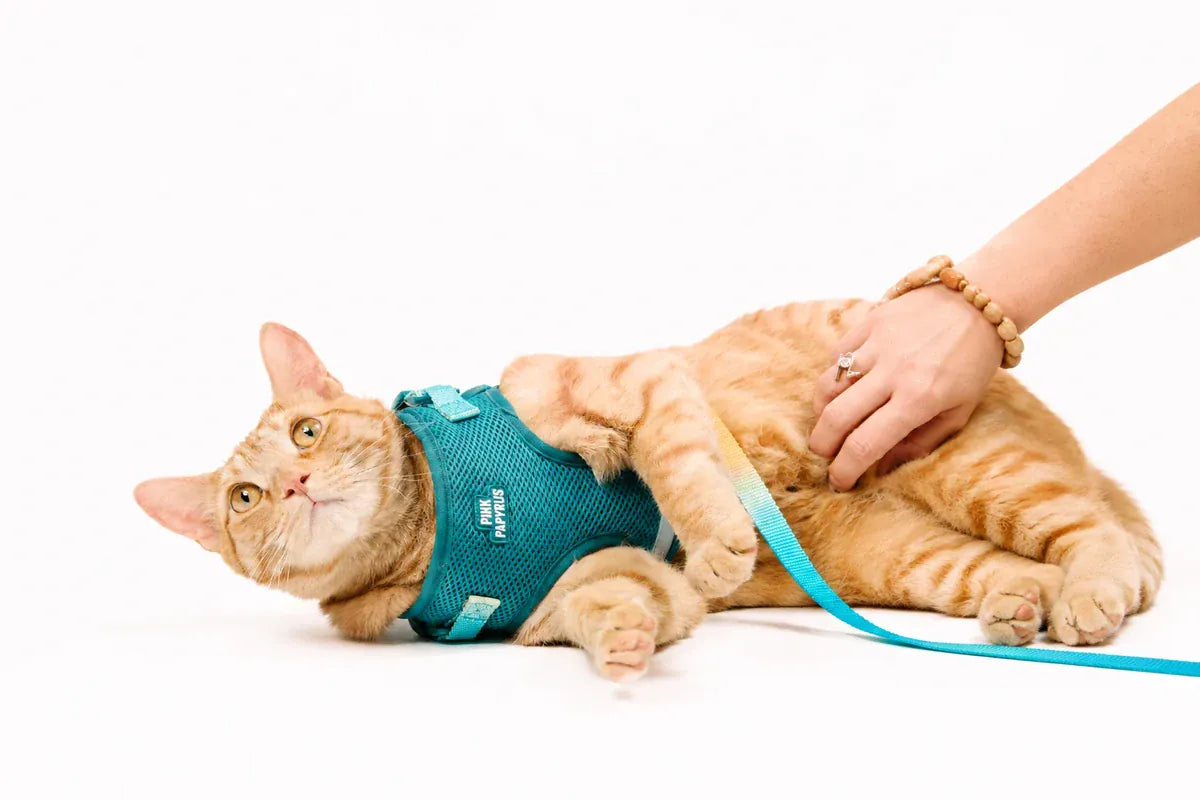
Which harness suits you depends on where you walk. If you're on busy sidewalks, at the vet, or running agility, get one with a handle on the back, because you can take hold of it and keep your dog beside you through a tight spot. Ours is stitched into every harness, and you'll find them all in our dog harnesses with handles collection.
For everyday neighborhood walks, anything in our dog harness collection does the job. They come in colors you can match to a leash, which saves you hunting for something that goes with a bright blue merle coat.
If your cattle dog is on the bigger side, our large dog harnesses pick up where the medium stops. For a properly broad-chested dog, our guide to the best dog harness for Labs covers what changes when a dog is wide through the ribs.
Routine Inspection and Hardware Care
A cattle dog puts more wear through a harness than a steady walker does, so check yours every week. Run your fingers along the stitching at both leash rings, bend the buckles to look for hairline cracks, and feel the straps where they sit behind the front legs.
Wash it by hand in warm water with a mild soap when it needs it, then towel it dry or leave it to air dry.
Replace the harness if a ring has bent out of shape, a buckle won't click home, or the straps have frayed at the edges. After a rough day of play or a walk where your dog hit the end of the leash a few times, give it the same check rather than waiting for the weekend.
Measure your dog, pick a size with room to adjust, and check that they can't reverse out of it before you head down the street. Our dog harnesses come in sizes from extra small to large, and if you want a hand choosing, message us with your dog's two measurements.
Frequently asked questions
What If the Harness Rubs Even Though It Feels Snug?
Move the straps before you add padding. The belly strap should sit a couple of inches behind your dog's armpits, and the chest strap should sit flat rather than up against the point of the shoulder. If your dog is still rubbing after that, or you notice them taking shorter steps, the shape is wrong for their build and another cut will suit them better.
Will a Front Clip Stop My Cattle Dog Lunging at Bikes?
It gives you a way to turn them, which is what you need in the moment, but it won't change how they feel about bikes. Use the front ring so you can steer, keep your distance from the road, and feed your dog treats while a bike goes past so that bikes start to mean something good. A trainer is the fastest route if the lunging is getting worse.
What About a Dog Who Grabs the Leash?
Cattle dogs often do. Carry a tug toy and hand it over when they start, so they've got something they're allowed to grab. A harness helps here too, since the leash runs from their back or chest rather than dangling by their face.
How Do I Tell If the Harness Is Too Small?
Look at where it sits rather than whether it does up. If the belly strap has ended up in their armpits, the chest strap rides toward their throat, or there's no adjustment left, they need the next size up.