





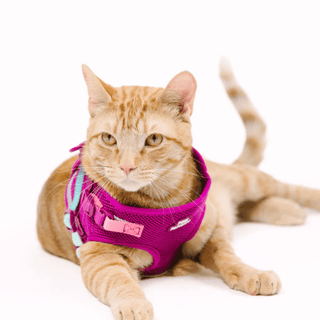
How to Train a Cat to Walk on a Harness & Leash
Yes, cats can go on walks—and no, you’re not crazy for wanting to try. Leash training a cat is one of the fastest-growing pet trends, and for good reason. With the right cat harness, a gentle leash, and a little patience, many cats can safely enjoy the outdoors without roaming free. Whether your cat is curious, confident, or just bored indoors, harness and leash training can be a total game-changer 🐱
Who This Is For
This guide is for cat parents who want to give their indoor cat safe outdoor enrichment.
If you’ve ever wondered “Can cats really walk on a leash?”—this blog is for you.

Can Cats Really Be Leash Trained?
Yes—But It’s Very Different From Dogs
Cats aren’t tiny dogs. They don’t respond to leash training the same way, and that’s okay.
Most cats can learn to walk on a leash if:
-
They’re introduced slowly
-
They wear a well-fitted harness (never just a collar)
-
Training is positive and pressure-free
Think confidence-building, not control.
Step 1: Choose the Right Cat Harness and Leash
Harness First. Always.
A cat harness is non-negotiable. Cats can slip out of dog collars easily, and safety comes first.
Look for:
-
Secure, escape-resistant design
-
Soft, lightweight materials
-
Adjustable straps for a snug (not tight) fit
Pair it with a lightweight leash so your cat doesn’t feel weighed down.
This is where matching walk sets really shine—consistent gear helps cats feel familiar and calm.
Step 2: Let Your Cat Get Comfortable Indoors
Start Without the Leash
Before heading outside, your cat should feel relaxed wearing the harness indoors.
Do this:
-
Put the harness on for short periods
-
Let your cat walk, sit, and lounge in it
-
Reward calm behavior with treats or praise
If your cat flops over dramatically… totally normal. Give it time.
Step 3: Attach the Leash (Still Indoors)
Once the harness feels normal:
-
Clip on the leash
-
Let your cat walk around freely
-
Follow your cat—don’t lead
This stage teaches your cat that the leash isn’t scary or restrictive.
Keep treats nearby in a treat pouch so rewards are instant.
Step 4: Take the First Outdoor Adventure Slow
Choose a Quiet, Safe Area
Your first outdoor walk should be calm and familiar.
Best options:
-
A backyard
-
A quiet patio
-
A low-traffic area near home
Let your cat explore at their own pace. You’re there for safety, not direction.
Common Cat Leash Training Mistakes
Avoid these and you’ll save yourself a lot of frustration:
-
Pulling on the leash
-
Rushing the process
-
Skipping indoor practice
-
Using a collar instead of a harness
Cats learn through trust—not pressure.
How Long Does Cat Harness Training Take?
Every cat is different, but most show progress within 2–6 weeks.
Signs of success:
-
Calm movement in the harness
-
Curious exploration outdoors
-
Less freezing or flopping
End walks on a positive note and offer calming enrichment afterward—lick mats can help cats decompress and reset.
Safety Tips for Walking a Cat on a Leash
-
Always supervise outdoor time
-
Avoid loud or crowded areas
-
Check harness fit before every walk
-
Never leave your cat tied or unattended
A calm walk builds confidence—for both of you.
Final Thought: Let Your Cat Lead
Leash training a cat isn’t about distance or steps—it’s about enrichment and trust. When done right, harness walks become a safe way to satisfy curiosity, burn mental energy, and strengthen your bond.
Slow, stylish, and stress-free wins every time.
FAQs
Can any cat be leash trained?
Most cats can, especially confident or curious ones, but every cat learns at their own pace.
Should I use a collar or harness for leash training a cat?
Always use a harness. Collars are unsafe for leash walking cats.
How long should a cat walk last?
Start with 5–10 minutes and build up slowly as your cat gains confidence.
Is leash walking good for indoor cats?
Yes. It provides safe enrichment, mental stimulation, and controlled outdoor access.
Written by Christine Abdelmalek
Founder and SHE-E-O of Pink Papyrus
Obsessed with crafting dog accessories—beautiful, brilliantly functional, and made with love.


