




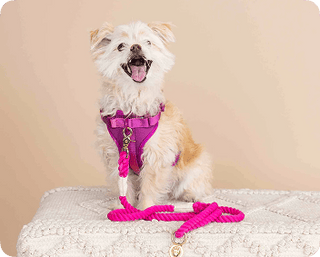
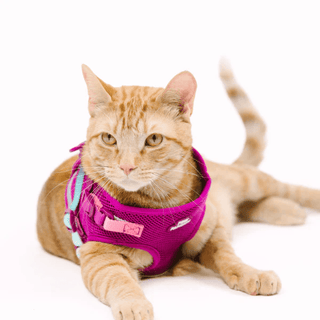
Adjustable Step in Dog Harness Fit and Buying Guide
An adjustable step in dog harness is exactly what it sounds like: a harness your dog steps into rather than pulls over the head, with straps you can dial in for a snug, comfortable fit. No head-fumbling, no anxiety about ears and muzzles, just front paws in the loops, buckle over the back, and you're ready to walk. Getting it truly right, though, takes more than fastening the clip and heading out the door.
What makes a step-in harness different
Most harnesses fall into one of two categories: over-the-head or step-in.
Over-the-head styles slip on like a sweater and may offer front, back, or dual leash-ring options.
A step-in harness skips the head entirely.
You lay it flat, guide the dog's front paws into two leg openings, pull the straps up the sides, and buckle at the back.
The shape is typically triangular around each leg rather than rectangular, which keeps the fit close without adding bulk.
That no-head-contact design is a genuine advantage for dogs with neck or ear sensitivity, dogs who've had a bad experience with things coming over their face, or any dog who plants their feet the moment a harness appears. It's also useful for puppies who are still learning that gear equals good things, not something to panic about.
One thing worth knowing upfront: most step-in harnesses have a single back-clip D-ring.
That's great for relaxed walkers and dogs with good leash manners.
It's less ideal for strong pullers, where a front-clip or dual-clip harness gives you a lot more steering ability.
Easy on and neck-friendly are different questions from how much control you need on a walk. If you are deciding whether a harness or collar is better for your dog, consider neck sensitivity, pulling strength, and the level of control you need on walks.

Step-in harness at a glance: who it works well for
| Dog situation | Step-in a good fit? | Notes |
|---|---|---|
| Head-sensitive or anxious about over-the-head gear | Yes | Main reason most owners switch to step-in |
| Small dogs, lightweight builds | Yes | Soft step-in styles sit close without overwhelming a small frame |
| Growing puppies | Short-term | Highly adjustable models help, but many puppies outgrow a step-in within 3 to 4 months |
| Relaxed walkers or dogs with good leash manners | Yes | Back-clip D-ring works well for calm, cooperative dogs |
| Strong pullers | With caveats | Back-clip step-in harnesses can encourage pulling; consider front-clip or dual-clip for better control |
| Escape artists or deep-chested dogs | Use caution | Dogs with narrow shoulders or a deep-chested build can reverse out; three-point harnesses may be more secure |
| Dogs with neck injury or medical condition | Often yes | Avoids neck pressure entirely; check with your vet for specific conditions |
If your dog falls into the escape-artist or strong-puller column, that doesn't mean a step-in is off the table. It means adjustability, strap placement, and buckle quality matter even more, and a no-pull dog harness with a front or dual D-ring may serve you better day to day.
Measure before you buy
Size charts vary by brand, so your dog's actual body measurements are the only reliable starting point. Breed or weight alone won't cut it, especially for deep-chested dogs or those with a narrow waist relative to their ribcage. We've seen plenty of owners end up with a harness that fits the listed weight but gaps at the chest or digs in at the armpits.
Two measurements cover most step-in harnesses.
First, girth: wrap a soft tape measure around the widest part of the ribcage, just behind the front legs.
Second, lower neck: measure at the thickest part of the neck just above the shoulder blades.
If your dog lands between sizes, go up.
A slightly larger harness with all straps adjusted in is safer and more comfortable than a tight one with no room to breathe.
How to put it on and adjust it properly
The lay-flat method works best for most dogs, especially wiggly ones. Calm the moment as much as you can before you start, because a dog who associates harness time with treats and patience is a dog who cooperates on walk number 50 as much as walk number one.
- Lay the harness flat on the floor with the inside facing up, buckle open. Make sure you can clearly see which loop is left and which is right before the dog steps anywhere near it.
- Guide your dog's front paws into the two leg loops, one paw at a time. Stand or squat behind your dog so you can guide each leg calmly without blocking the dog's view forward.
- Pull the harness straight up along both sides of the dog's body toward the back. The straps should run up the chest and meet at the top of the back.
- Fasten the buckle over the dog's back and check that the D-ring sits around the shoulder-blade area, not sliding forward toward the neck or backward toward the hips.
- Adjust each strap so you can slide two fingers underneath any part of the harness without forcing it. You should not be able to pinch loose fabric or pull the harness away from the body more than an inch or so.
- Ask your dog to take a few steps and sit once. Watch for any straps pulling tight across the shoulders during movement or riding up into the armpits when the legs swing forward.
Fit problems to catch before they become real problems
A harness can look fine while your dog is standing still and cause real discomfort the moment they start moving. Research measuring pressure distribution under three different types of harnesses used for guide dogs found significant differences among designs, reinforcing why fit and construction matter when a harness is worn in motion. Rubbing in the armpit area is the most common issue: straps sitting too close to the elbow can push the front legs outward during a normal gait. For more on choosing padded materials while avoiding chafing and irritation, see Are harnesses bad for dogs? Pros and cons. If you notice your dog walking a little wide in the front, or if you see redness or missing fur under the legs after a walk, the chest strap needs to move.
Shoulder restriction is a subtler problem. A review titled Health implications of dog-worn equipment: a review of known and alleged physical risks identifies poor fit, surface irregularities, and trapped debris as potential contributors to chafing and discusses how restrictive harness designs may interfere with shoulder movement.
A horizontal strap running across or behind the shoulder blades can interfere with how the front legs extend.
Watch your dog walk away from you.
If the stride looks shortened or stiff compared to how they move without the harness, the strap placement is worth reconsidering.
Slipping out is the third red flag. Dogs with deep chests and narrow shoulders, or any dog who panics and pulls backward, can reverse out of a step-in if the straps are even slightly loose. If the harness slides forward over the shoulders or your dog can back out of it, it's either the wrong size or needs a design with more contact points.

What to look for when buying
A step in adjustable dog harness can range from a basic nylon strap design to a padded, multi-point construction. Here's what actually separates a dependable harness from one that ends up in a drawer after three walks.
- Adjustment points: More is better. At least two or three adjustment points let you fine-tune the fit around the neck opening and girth independently, which matters a lot for dogs with an unusual chest-to-neck ratio.
- Buckle quality: Buckles take daily stress. Look for a solid click, no flex in the plastic, and a design that won't accidentally release under pressure. Metal hardware on the D-ring adds durability for dogs who pull occasionally.
- D-ring placement: On a step-in, the D-ring should sit around the shoulder-blade area. A D-ring that rides too far forward puts leash pressure on the neck; one too far back gives you less directional control.
- Padding and material: Padding helps dogs with sensitive skin, but breathability matters too. Neoprene is cushioned and can cool down in water, but it traps heat. Mesh is light and breathable but thinner. Seams and wrinkles under the straps matter as much as padding thickness.
- Washability: Harnesses pick up dirt, sweat, and bacteria fast. Choose a construction that can be hand- or machine-washed without the hardware corroding or the webbing distorting.
- Reflective elements: Worth having for early morning or evening walks. Reflective stitching or piping adds visibility without changing the fit or feel.
- Aesthetics and mix-and-match potential: Gear you love the look of gets used consistently, and a harness that coordinates with a collar or leash makes the whole setup feel intentional rather than thrown together.
We think about this list every time we design a new piece in our Dog Harnesses collection: adjustable straps, strong buckles, padded materials, and a modern look that holds up after real use. If you're weighing a wild one adjustable cushioned step-in dog harness or similar padded option, these are the same criteria worth comparing across any brand before you commit.
When a different harness style makes more sense
Step-in harnesses are genuinely great for the right dog and walking situation, but they're not universal.
If your dog pulls hard and consistently, a back-clip step-in gives the pulling behavior nowhere useful to go.
A front-clip or dual-clip design redirects forward momentum instead of riding along with it.
Our no-pull dog harness options are worth a look if you want the no-over-head convenience alongside better steering. For colder walks, a dog jacket with built in harness can add warmth without requiring a separate layer of gear.
For escape-prone dogs, especially those with narrow shoulders or a deep chest, a three-point harness with contact at the neck, chest, and belly gives you more coverage and fewer gaps to reverse through. And for any dog with a pain condition, recurring respiratory signs, or behavior that makes walks genuinely stressful, a conversation with your vet or a qualified trainer before settling on equipment is time well spent.
For small dogs in particular, a small dog harness designed with their proportions in mind will fit closer to the body and chafe less than a standard harness sized down. Weight-range sizing and actual body measurements often tell different stories on a compact or fine-boned dog.
The practical next step
Measure your dog's girth and lower neck before you open any product page.
Match those numbers to the brand's actual size chart, not a generic breed guide.
Once the harness arrives, put it on using the lay-flat method, do the two-finger check under every strap, then watch your dog walk.
Fit in motion is the real test.
If something looks off, adjust one strap at a time and check again.
A harness that fits correctly should disappear from your dog's awareness within a block or two. If you are wondering whether dogs can wear a harness all the time, give your dog regular breaks and check for rubbing or restricted movement.
Browse our modern dog harness collection for designs that balance a secure, adjustable fit with a look you'll actually want to use every single walk.
Frequently asked questions
Can a step-in dog harness work for a puppy that is still growing?
Yes, but recheck the fit frequently because puppies can outgrow a harness within a few months. Choose a model with several adjustment points and inspect the straps after growth spurts.
How do I stop my dog from backing out of an adjustable step-in dog harness?
Check the chest and neck openings while your dog stands, sits, and backs up, then test the fit in a secure area before a walk. Escape-prone dogs may need a three-point design with an additional belly strap rather than a basic step-in style.
Is a padded step-in harness good for hot weather?
Not always. Padding can reduce strap pressure, but dense neoprene or thick fabric may hold heat and moisture, so a lightweight, breathable design is usually a better choice for warm walks.
What should I check if my dog suddenly dislikes wearing the harness?
Look for damp fur, trapped dirt, twisted straps, loose seams, or redness near the armpits and chest. Remove the harness if the skin is irritated, and consider a different shape or professional guidance if discomfort continues.