



How Are Dog Harnesses Supposed to Fit? A Simple Guide
How are dog harnesses supposed to fit? Snug but not tight, clear of the throat and armpits, and stable enough that it does not shift when your dog moves. At Pink Papyrus Co., we see a lot of harness questions come through, and the good news is that getting the fit right is simpler than it looks once you know what to check.
Before you start
Chest girth is the measurement that matters most for harness sizing.
Wrap a flexible tape measure around the widest part of your dog's rib cage, keeping it snug but not pressing in. For a fuller walkthrough, see how to measure my dog for a harness before comparing the measurement with a size chart. For a step-by-step guide, learn how to put harness on dog before heading out.
Compare that number to the harness size chart for the specific model you are buying, because sizing varies between brands.
Neck circumference is worth taking too, especially for step-in or vest-style designs.
- A flexible tape measure or a piece of string you can measure against a ruler
- Your dog standing squarely on all four feet, head forward, for an accurate read
- The size chart for the specific harness model, not a generic breed guide
- Awareness of coat thickness: a fluffy or longer coat can make a strap feel looser than it actually sits against the skin
One thing worth knowing before you start: deep-chested dogs often land in a much larger harness size than their height or weight would suggest. Always measure. Never assume by breed.
How to fit a dog harness correctly
- Check all straps for twisting before putting the harness on. A twisted strap digs in and causes chafing even when the overall size is correct. Lay the harness flat and run each strap through your fingers first.
- Put the harness on with your dog standing on all four feet. For a standard over-the-head style, slip the neck loop over the head first, then guide the front legs through and fasten the chest or belly buckle behind the front legs. For a step-in design, lay it flat on the floor, guide each paw into its triangle opening, then clip the back closure. For a front-clip or no-pull style, position the leash ring centered at the chest before fastening.
- Adjust the neck strap so it sits below the throat without pressing against the windpipe. Slide two fingers underneath: they should move with a little resistance, not glide through easily, and not feel pinched.
- Adjust the chest or girth strap so it sits behind the front legs, well clear of the armpits. Apply the same two-finger check. If the strap is loose enough to drift forward into the armpit area, that is where chafing starts.
- Check shoulder clearance. The harness should not cross over the point of the shoulder or pin the shoulder blades together. Gently move each front leg forward and back to confirm the legs swing freely with no resistance from the straps.
- Balance the adjustments across all straps. Tightening one strap shifts tension elsewhere, so after each change, recheck the others. The harness works as a system.
- Walk your dog for a few minutes, then stop and feel all the straps again. Movement changes how a harness sits. A back piece that looked centered can rotate once leash tension is applied. Readjust and recheck until everything stays put.

How to check whether the fit is right
Standing still is not a complete fit check. A harness that looks perfect on a posed dog can shift the moment your dog starts pulling or steps off a curb. Check these points after a short walk.
- Two fingers fit snugly under every strap, but three fingers do not. Dogs with thicker or longer coats may need straps slightly tighter to account for the extra layer between strap and skin.
- The harness has not rotated to one side or ridden forward toward the neck.
- The chest strap is still sitting behind the armpits, not in them.
- Your dog's gait looks normal. The front legs swing forward without shortening or hesitation.
- Pull the harness gently backward, forward, and side to side. It should move with your dog rather than allowing the dog's body to slide through.
- Step backward while your dog steps forward to simulate leash tension. The harness should not slip forward over the dog's head.
After removing the harness, run your hands along the dog's neck, armpits, and chest. Research on pressure distribution under three different types of harnesses used for guide dogs found the highest pressures in the right sternal region, reinforcing the need to check chest and sternum pressure points as well as the back and straps. Redness, matted fur, or hair loss along the strap lines means something is rubbing. Check these areas a few times a week, not just when something looks obviously wrong.
How snug should a dog harness be
The two-finger rule is the clearest practical standard for how tight a dog harness should be: two fingers slide under any strap with a little resistance, but do not glide through easily. If two fingers go in with room to spare, tighten. If they barely fit and feel squeezed, loosen.
Apply this check to every individual strap, not just the one that feels obviously off.
A harness can feel correct at the neck and be dangerously loose at the chest.
Dogs with thick or fluffy coats need the straps a touch snugger than the bare-fingers test suggests, because the fur creates a cushion between the strap and the skin.
After a grooming session or a seasonal coat change, recheck the fit before the next walk.
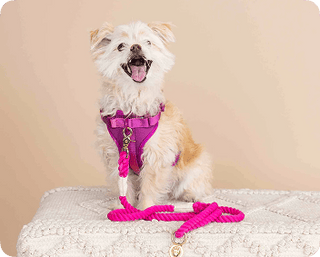
How a harness should look on a dog is worth picturing: straps lie flat against the body with no twisting or gaping, the back D-ring sits centered on the back (or the front ring sits centered on the chest for a front-clip style), and nothing crosses over the point of the shoulder or presses into the throat. From behind, the harness looks symmetrical. A well-fitted harness stays centered even when the dog is trotting, sniffing the ground, or pulling toward a squirrel.
Troubleshooting common fit problems
Most fit issues follow recognizable patterns and are fixable with strap adjustments. A few signal that the harness style is not right for your dog's body shape. Learning about the types of harnesses for dogs can help you choose a design that suits your dog's body shape and walking needs.
- Straps rubbing in the armpits: The girth strap behind the front legs is too loose and drifting forward. Tighten the girth strap first. If the chest strap is simultaneously too tight, the uneven tension pushes the girth strap into the armpit. Adjust both straps together.
- Harness rotating or sliding sideways: Usually the overall fit is too loose. Tighten all straps by small increments and retest with a short walk. If it still rotates after careful adjustment, the harness shape may not suit your dog's proportions.
- Dog backing out or escaping: A three-point harness with a rear belly strap significantly reduces the risk of backing out and is worth considering for escape artists. In the meantime, tighten until two fingers barely slide under each strap, then do the step-backward escape check.
- Harness pressing on the throat: The neck loop is sitting too high. Loosen it and reposition so the strap clears the throat entirely. If the harness cannot be adjusted to clear the throat on your dog's neck, the size or style is likely wrong.
- Front legs look stiff or restricted: The shoulder straps are crossing over the shoulder joints. Reposition or loosen the neck section so straps sit behind the shoulder blades. If the style crosses over the shoulder by design, consider a Y-shaped or front-clip alternative that keeps the shoulder area free.
- Harness shifts on walks but looks fine standing: Recheck all straps after every walk for the first week with any new harness. Adjust, walk, check, and repeat until it stays put.
If careful adjustment consistently fails to resolve rubbing, throat pressure, shoulder restriction, or escape risk, the problem is usually harness geometry rather than measurement error. That is the signal to try a different style, not to keep tightening the same one. For dogs that pull, a 2025 review suggests that non-tightening front-clip harnesses may balance reduced pulling with less discomfort than tightening harnesses, martingale collars, or head collars, as discussed in the Review of Collars, Harnesses, and Head Collars for Walking Dogs. If you are deciding between walking equipment, our guide to whether is a harness or collar better for a dog can help you choose the right option.

Keeping the fit right as your dog changes
A good fit at purchase is not a permanent fit.
Puppies can outgrow a harness in weeks.
Adult dogs fluctuate with weight changes, seasonal coats, or post-surgery recovery.
We recommend building a recheck into your routine: puppies weekly, adult dogs every six months or whenever you notice rubbing, coat changes, or unusual behavior on walks.
After grooming, check the straps before the next walk.
A professional groom can reduce a coat enough that a previously snug harness suddenly slides.
After any significant weight change, measure again rather than assuming the same size still works.
The dog's body is the reference, not the label on the harness.
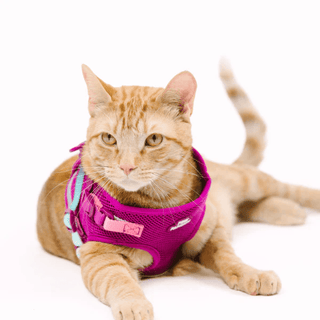
For cat owners curious about how a cat harness is supposed to fit: the same two-finger principle applies, but the stakes are higher because cats are remarkably good at working free when startled outdoors.
The fit should be more snug than loose, with two fingers fitting under both the neck and body sections but no real slack.
A harness that is too large is a genuine safety risk outside.
Start indoors with the harness unfastened, then fastened and adjusted gradually with positive reinforcement, and never rush a cat outside before it wears the harness calmly at home.
When a harness cannot be adjusted into a safe, comfortable fit because the design does not match that dog's body, stepping into a different style is the practical next move. If your dog needs extra warmth on walks, a dog jacket with built in harness can combine coverage with a secure fit.
Our Dog Harnesses collection is built to be functional and properly adjustable, so the fit can actually be dialed in to your dog's proportions.
A harness that fits well is easy to forget your dog is wearing: no tugging at the straps, no resistance at the door, no post-walk skin check that finds redness. For guidance on how long a dog should wear a harness, check the fit regularly and remove it when your dog is resting at home.
That is the standard to aim for, and it is completely achievable with the right fit and a few minutes of attention after each walk.
Frequently asked questions
How often should I check whether my dog harness still fits?
Check it after walks, grooming, and any noticeable weight change. Puppies may need weekly checks, while adult dogs should be remeasured about every six months or whenever rubbing or slipping appears.
Why does my dog’s harness keep sliding into the armpits?
The strap balance or harness shape may be the problem, not simply loose adjustment. A loose girth strap combined with an overly tight chest strap can pull the girth strap forward, so correct both areas before tightening further.
What should I do if my dog can back out of the harness?
Stop using it for walks until you fix the escape risk. Recheck the fit while your dog stands, test whether the harness can move over the head, and consider a three-point design with an added rear strap if careful adjustment is not enough.
Can a no-pull harness restrict my dog’s movement?
Yes, especially if it twists, rides toward the throat, or sits across the shoulder joint. A no-pull harness should redirect pulling without limiting a normal stride, so change the style or seek fitting help if adjustment does not solve the restriction.