




Different Types of Dog Collars: How to Choose
For most pups, a flat collar with a buckle or quick-release clasp is the everyday go-to. It holds their ID tags, clips onto the leash and stays comfy from breakfast to bedtime. The main difference between the types of dog collars is what happens when the leash goes tight, so the right one for your dog depends on whether they pull, wriggle out of things or tend to get tangled.
The Main Types of Dog Collars
Flat Dog Collars
A flat collar fastens with a buckle or quick-release clasp and sits snugly around your pup's neck without squeezing. It's the collar most dogs wear every day, with a D-ring for the leash and ID tags. Keep it snug, because a loose flat collar can let your dog slip free. Every collar we make is a flat collar with a gold buckle and D-ring.

Breakaway Dog Collars
A breakaway collar pops open under pressure if your dog gets snagged on something, which makes it a great pick around the house or during supervised play but a risky one on leash walks. For walks, look for a double-ring design that releases without coming all the way off, and clip the leash to both rings.
Martingale Dog Collars
A martingale (also called a limited-slip collar) has a small second loop that tightens the collar a little when the leash pulls, so your dog can't back out of it. It's a favorite for greyhounds and other sighthounds, whose necks are wider than their heads. A half-martingale works the same way, with a flat band and a short loop of fabric or chain. Fit either one carefully and supervise your pup while they wear it, because a loose or tangled loop can cause discomfort.
More Types of Collars for Dogs
A rolled collar is a round strip of leather in place of a flat band, which makes it lovely for long-haired breeds whose fur would otherwise mat or felt underneath. It's gentle on short coats and sensitive skin too.
A lounge collar is a light, pretty collar for wearing ID tags around the house, so do not clip a leash to one. It can stay on at home, and you add a walking collar or harness when it's time to head out.
Working collars are made for a job, like reflective collars for visibility at dusk and GPS collars for hunting dogs who range far ahead. Service dogs often wear a vest or patch, although US law doesn't require one.
Training collars, like slip collars, choke chains, prong collars and electronic collars, are specialist tools some trainers use as a last resort for strong, stubborn or reactive dogs. Use one only with a qualified trainer or veterinary behaviorist, and treat it like a harness, on for the session and off as soon as it's done, because some slip collars and choke chains can tighten without a limit if they catch on something.

Head Halters and Harnesses for Dog Training
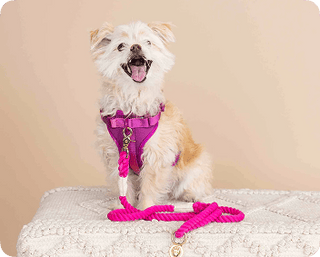
A head halter loops around your dog's muzzle and behind the ears, and it needs a slow introduction with no leash jerks. With a harness, the leash pulls on your dog's chest, not their neck, which makes it a great starting tool for puppy leash training and a kind choice for dogs with neck or airway trouble. Pop either one on for the walk and take it off once you're home, unless you're working on a specific training plan. Our guide to collars for big, strong dogs has fitting tips.

Types of Dog Collars Chart
This chart puts every type side by side, from the everyday flat collar to the specialist ones.
| Type | How It Works | Good For | Watch Out For |
|---|---|---|---|
| Flat collar | Buckle or quick-release clasp, no tightening | Everyday wear, ID tags, relaxed walkers | Escape if loose, neck pressure if your dog pulls hard |
| Breakaway collar | Releases under pressure | Home and supervised play | Risky on leash walks unless it's a double-ring design clipped to both rings |
| Martingale or half-martingale | Tightens a limited amount under leash pressure | Sighthounds and dogs that slip out of flat collars | Needs a careful fit and supervision |
| Rolled collar | Round leather strip in place of a flat band | Long-haired breeds, short coats and sensitive skin | Fit it with the two-finger rule, like a flat collar |
| Lounge collar | Light, decorative collar for ID tags | Wearing ID around the house | Do not clip a leash to it |
| Working collar | Reflective or GPS tracking | Visibility at dusk, dogs that range far | Charge GPS models before heading out |
| Training collar | Slip, choke, prong or electronic | A last resort, with a qualified trainer | On for the session, off as soon as it's done |
Picking a Material for Any Type of Dog Collar
Once you know the type, the material is the fun part. Our guide to good dog collars covers which materials suit water-loving doggos, couch potatoes and big scratchers, and you'll find velvet, vegan leather and waterproof styles among our dog collars, sleek modern dog collars and bolder unique dog collars.
How to Choose a Dog Collar
- Measure your pup's neck first. Our guide to measuring a dog for a collar shows you how.
- Match the type to your dog, like a flat collar for calm walkers, a martingale for escape artists and sighthounds, a rolled collar for long coats or a front-clip harness for pullers.
- Check the fit once it's on. Our dog collar fit guide covers how snug is snug enough.
- Have fun with the look. If you're curious whether a color means anything, read up on dog collar color meanings before you pick.
Frequently asked questions
What type of collar is best for a puppy?
Most puppies do well with a light flat collar for their ID tags and a harness for leash training, since a harness keeps any pulling off their neck while they learn. A breakaway collar is another option for time at home. Check the fit often, because your furkid will grow faster than you think.
Is a back-clip harness a bad choice for a dog that pulls?
It can make pulling easier for some dogs, so a front-clip harness is usually the better pick for a puller. Back-clip harnesses can suit flat-faced breeds like pugs and French bulldogs, though, along with calm walkers who don't pull.


