



Good Dog Collars: How to Choose the Right Fit and Material
Good dog collars fit your pup snugly and stay comfy all day, from the morning walk to the evening couch cuddle. Our favorite is the Blaze Dog Collar, a soft red velvet collar with gold hardware. Our second choice is the Pippa Dog Collar for water lovers and puddle jumpers, and our honorable mention (for a polished look) is the Lola Dog Collar in soft vegan leather.
No two pups are alike, and as any pet parent knows, no single best dog collar suits them all. The right one depends on your dog's size, coat and habits. Long or curly coats can tangle and mat under a collar, and a dog who scratches a lot needs a soft one that won't rub itchy skin. If your dog pulls you down the street like a sled team, though, a collar isn't the right walking tool at all.
Fit and Construction of a Good Dog Collar
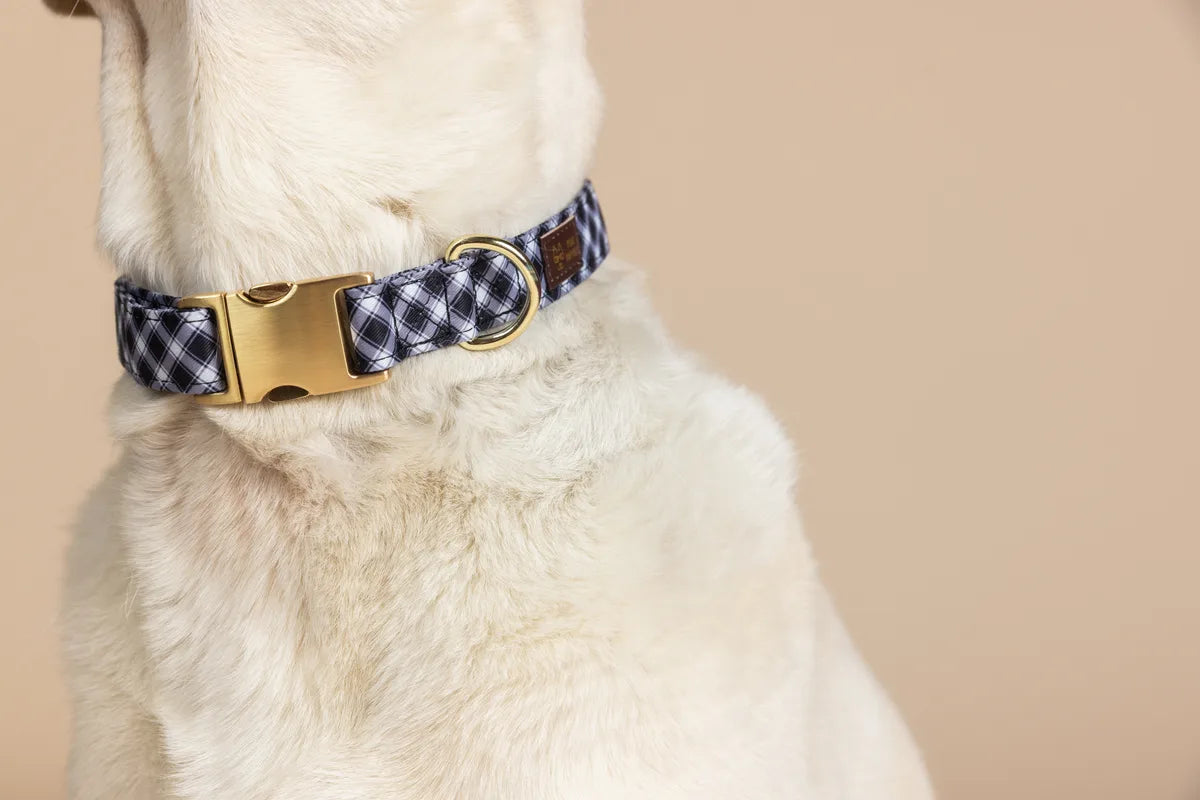
Let's start with fit. You should be able to slide two fingers comfortably between the collar and your pup's neck, and it shouldn't slip over their head. Our guide to how tight a dog collar should be has all the details, and here's how to adjust a dog collar if your pup is stuck between holes.
Next, have a good look at how the collar is made, because even a gorgeous fabric won't survive zoomies and daycare wrestling matches if the stitching is weak or the hardware is flimsy. Here's what we'd look for:
- Plenty of adjustment room for a growing puppy or a fluffy winter coat
- Reinforced stitching where the buckle and D-ring attach
- A smooth inner edge that won't rub the skin or tangle longer fur
- A metal buckle and D-ring that click shut and won't bend
Every one of our collars has reinforced box stitching at the stress points and a gold buckle and D-ring, made for clipping on a leash and heading out the door. If you're wondering about martingale, rolled or sighthound collars, our guide to different types of dog collars explains what each one is for.
After a few days, part the fur and peek underneath for rubbing or redness. If you spot any, adjust the fit or try a softer material, especially for a big scratcher. And if your pup keeps pawing at their new collar, our article on whether dogs like wearing collars has tips for helping them settle in.

The Best Dog Collars for Your Pup's Routine
The most comfortable dog collars suit your pup's day, whether that's a lazy Sunday on the couch or a dip in the lake. It pays to think about how a collar will hold up to scratching and rubbing too. Some "velvet" collars are really just flocking (short fibers glued onto a surface) on a plastic backing, and that fuzz scuffs off fast.
Our favorite: the Blaze Dog Collar. Blaze is soft red velvet with a gold buckle and D-ring, made for everyday cuddle bugs. It comes in four sizes for necks from 8 to 28 inches, and that rich red looks gorgeous on nearly every coat.
Second choice: the Pippa Dog Collar. If your pup treats every puddle as a personal invitation, Pippa is the one. It's one of our waterproof All-Weather collars, with coated webbing over a custom-dyed nylon core, so it won't soak up water or wet-dog smell and you can wipe the mud off in seconds. That reinforced core won't crack or tear, which makes Pippa our pick for durable dog collars for active dogs.
Honorable mention (for a polished look): the Lola Dog Collar. Lola is made from soft, cruelty-free vegan leather in pink and beige, finished with a gold Pink Papyrus logo bar.
If none of those feel quite like your pup, our dog collars also come in felted fabric, sparkly glitter and performance fabric. Browse our stylish dog collars, polished designer dog collars or unique dog collars for beautiful dog collars with a little extra personality. If you're shopping for a tiny pup, our guide to the best collars for small dogs has tips just for them.
Best Dog Collars With Name and ID Details
If your pup ever slips out the gate, the best dog collars with name and phone details make it easy for a kind stranger to help them get home. You can add an embroidered number, a nameplate or a tag on the D-ring, or a smart tag with an NFC chip (the tap-to-read tech in contactless cards) or QR code that a finder can scan with their phone. Keep the ID on your dog's collar, not the harness, since the harness comes off as soon as you're home.
Keep those details current after a move or a new phone number. Your vet can give your dog permanent identification with a microchip too, but a finder needs a scanner to read a chip, while a tag can be read right there on the sidewalk. That's why vets recommend both, plus your dog's rabies tag.

Which Dog Collars Are Best for Strong Pullers and Training?
So, which dog collars are best for strong pullers? Honestly, often none of them. A collar isn't the right walking tool if your dog pulls hard enough to cough, breathe noisily or knock you off balance. That kind of pulling against a flat collar can put harmful pressure on the delicate structures in your dog's neck.
For walks with a puller, clip the leash to a well-fitted front-clip harness, so you can turn your dog back toward you with gentle leash pressure. A head halter (a soft strap over your dog's nose and behind the ears) is another option if you introduce it slowly and keep a harness or collar clipped on as backup. Pop either one on for the walk and take it off once you're home, unless you're supervising a specific training or behavior plan. Our guide to collars for big, strong dogs has more fit tips.
If you're still struggling with a strong or stubborn puller, it's time for a new game plan. A professional trainer can help you decide whether your dog needs specialist tools and training, or whether all that pulling power belongs in a sport like canicross, bikejoring or skijoring!
Which dog collars are best for training? Most dogs learn to walk nicely with a flat collar or harness and lots of treat-filled practice. When nothing else has worked, some trainers use slip collars, choke chains, prong collars or electronic collars as a last resort, and a qualified trainer or veterinary behaviorist can show you how to fit and use them. Treat them like a harness, on for the session and off as soon as it's done, because some slip collars and choke chains can tighten without a limit if they catch on something.

Frequently asked questions
What should I look for in a dog collar brand?
A good brand shows a size chart with neck ranges for every collar, since sizes aren't standard between brands, and makes exchanges easy. If your Pink Papyrus collar is the wrong size, you can keep it and we'll ship you the right one.
How do I wash a velvet dog collar?
Hand wash it in mild soap and water and hang it to dry, which is the care routine we recommend for all our collars. Let it dry completely before it goes back on your pup, because a damp collar can irritate the skin.
What's the best dog collar for a pit bull or husky?
A 1-inch-wide flat collar sized to your dog's neck is a great everyday choice for both. Our Medium fits necks from 13 to 19 inches and our Large fits 18 to 28. With a husky's thick double coat, part the fur when you do the two-finger check.
Should my dog have more than one collar?
Yes, lots of pet parents keep two. A light lounge collar can stay on at home with your dog's ID tags, and you add a sturdy walking collar or harness for walks and take it off when you're home. Do not clip a leash to a lounge collar, since it isn't made to take the strain.