



Best Collar for Big Strong Dogs: Fit, Safety & Style
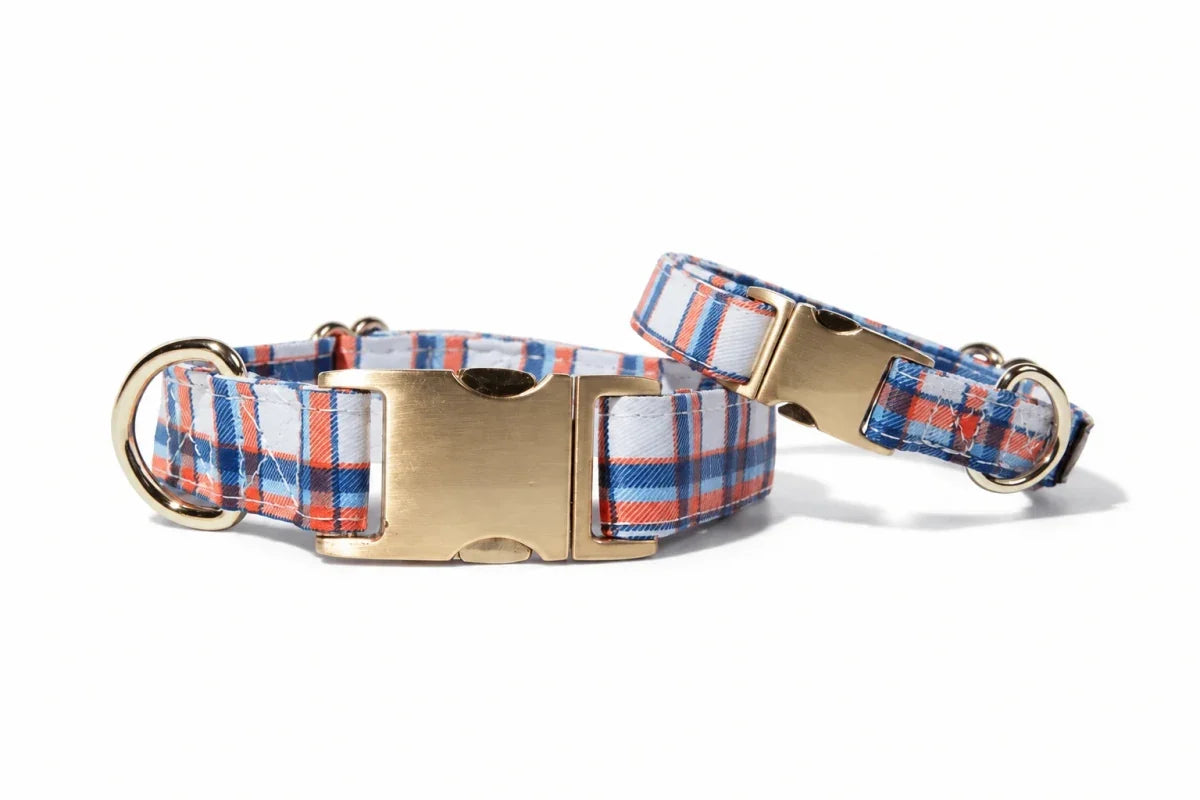
The best collar for big strong dogs is a sturdy, adjustable flat collar with reinforced stitching and solid hardware, worn for ID tags and everyday style, while the leash clips to a harness. Our favorite is the Pippa, a waterproof, mud-proof ombre collar with a reinforced nylon core, and our second choice is the Beckett, a bold leopard print for big personalities. Both come in our Large, which fits necks from 18 to 28 inches in a 1-inch width.
Big dogs do everything big, from zoomies to full-body shakes to lunging at the squirrel that's been taunting them all week. With the right collar, a good fit and a harness for walks, your big softie can look fabulous and stay comfy through all of it.
What to Look for in a Large Dog Collar
A big dog doesn't break gear on purpose. They break it by existing enthusiastically! Every shake, zoomie and sudden lunge tests the seams and the metal, so look past the label and check how a collar is put together.
- Width in proportion to the neck. A broad, muscular neck looks and wears better in a wider collar than in a skinny strap.
- Plenty of adjustment. Look for a long adjustment range, since thick necks vary a lot from dog to dog.
- Reinforced stitching. Look for box stitching at the stress points where the hardware attaches.
- Solid hardware. Buckles and D-rings should feel substantial in your hand.
- A coat-friendly material. Thick or long fur can mat under a collar, and a big scratcher wears out a delicate one fast, so match the material to your dog's coat and habits.
Every one of our large dog collars ticks those boxes, with reinforced box stitching at the stress points and a gold buckle and D-ring.

Why Big Strong Dogs Walk Best on a Harness
A flat collar is perfect for ID tags, but if your dog pulls hard against it, all that force goes into the neck, where vets warn it can injure delicate structures. A loose collar can also let a determined dog slip free.
If your dog pulls like a freight train, coughs or breathes noisily while pulling, or can flat-out overpower you, a harness is the safer way to walk. VCA recommends one that leaves the shoulder joints free to move and that your dog can't back out of.
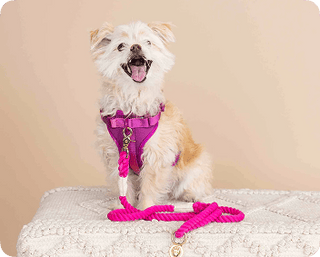
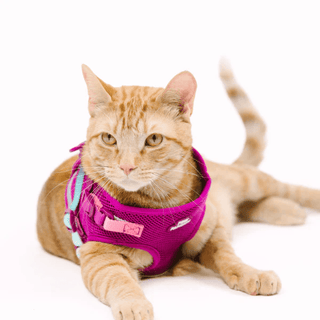
A harness spreads pressure across the chest instead of the throat. Our Joana Dog Harness is a step-in design with three attachment points, including a front clip for redirecting pullers, plus a traffic handle for keeping your dog close at crossings. Pair it with one of our organic cotton rope leashes, made for serious strength, or match your Pippa collar with the Pippa All Weather leash. If you're worried your escape artist could back out of the harness, clip a backup leash to their everyday collar too (never to a light lounge collar). Take the harness off once you're home, though, and do not leave one on indoors unless you're supervising your dog for a specific training or behavior goal.

Other Options for Big, Strong Pullers
If you're still struggling with a strong or stubborn puller, it's time to change the approach. With a head halter, you steer from the nose instead of the neck, so a smaller handler can manage a powerful dog. Introduce it slowly with lots of treats, never jerk the leash, and clip a second leash to the harness as a backup.
And if your dog was simply born to pull, give that pulling a job. With canicross (running with your dog harnessed to you) or joring (your dog pulling you on skis, a bike or a scooter), you can turn a sore arm into a sport you both love.
Groups like the American Veterinary Society of Animal Behavior recommend reward-based training, and that's always the place to start. Prong collars, choke chains and e-collars are specialist tools that some trainers turn to as a last resort, once everything else has been tried. If you go that route, work with a professional trainer or behaviorist, who can show you the right way to put it on and where it should sit on the neck. Do not leave one on your dog once the session is over.
How to Fit a Collar on a Big Dog's Thick Neck
Big dogs get the same two-finger fit as everyone else, so two flat fingers should slide under the collar with no room for a third. Broad-necked dogs with narrower heads are the sneaky ones, so gently ease the collar forward to make sure that it won't slip over their ears. Our guide to how tight a dog collar should be has the full fit check, and our guide to tightening a dog collar has the steps for when your big dog fills out.
Even a perfectly fitted collar can catch and twist in a crate, so take it off for crate time. If you're curious how dogs feel about all this, we've written about whether dogs like wearing collars.

How to Fit a Large-Dog Harness
Guessing a harness size from your dog's weight won't cut it, so grab a soft tape and take two quick measurements.
- Measure around the widest part of the chest, just behind the front legs.
- Measure around the neck where a collar would sit.
- Check both measurements against the product size chart.
- If your dog falls between sizes, go with the larger one and snug up the straps.
- Put the harness on and adjust the straps until two fingers fit under each one.
Choosing a Collar Style for Your Big, Strong Dog
Once the collar only has to hold the tags, the fun part begins! The Beckett's bold leopard print suits a big personality, and our Large also comes in soft velvet, vegan leather and waterproof styles, all with gold hardware.
Browse our designer dog collars for statement pieces, or explore the full range of dog collars to match your dog's coat and character. For a broader look at materials and features, our guide to good dog collars covers the basics at any size.
Frequently asked questions
Does a wider collar make it safe to clip the leash there?
No, because the pressure still goes straight to the neck when a strong dog pulls. A wider collar feels comfier and looks great, but the leash still belongs on the harness.
How long does it take to teach a big dog not to pull?
Most dogs need several months of regular practice to learn loose-leash walking, so don't panic if week two still feels like waterskiing. Keep sessions short and upbeat, reward every step on a slack leash, and ask your vet about a professional trainer if your dog lunges or barks on walks.