



How Tight Should Dog Collar Be? The Two-Finger Rule
A dog collar should be snug without squeezing, so you can slide two flat fingers between the collar and your pup's neck with just a little resistance. If two fingers won't fit, it's too tight. If there's a gap, or the collar slides over your dog's ears when you ease it forward, it's too loose.
That quick check works for most everyday flat collars, and it only takes a few seconds, so it's easy to do every time you clip on the leash.
The Two-Finger Rule for How Tight a Dog Collar Should Be
The two-finger test is the easiest way to check how tight a dog collar should be. Lay your index and middle fingers flat against your pup's neck and slide them under the collar. They should go in comfortably, with the collar resting lightly on top, snug enough to stay put but never pinching.
Room underneath is only one part of the check. Your dog's collar also has to stay put when they back up, shake or get the zoomies, so a collar that passes the finger test but still slides over their ears needs tightening a notch.

How to Fit a Dog Collar
- Put the collar where it naturally rests, toward the base of your dog's neck but above the shoulders, not high up behind the ears.
- Adjust the buckle or slider until the collar feels snug but relaxed. Our guide on how to tighten a dog collar has the steps for each style.
- Slide two flat fingers underneath. Loosen it if they won't fit, and tighten it if there's a visible gap.
- Gently turn the collar around the neck. It should move freely but never slip over your dog's head.
- Let your doggo walk, sit, sniff and play for a few minutes while you watch how the collar moves.
- After a few days, part the fur and check underneath for rubbing or redness.

How Loose Should a Dog Collar Be? Signs It's Too Tight or Too Loose
Your pup can't tell you their collar is pinching or slipping, so here's what to watch for.
Signs it's too tight:
- Coughing, gagging, wheezing or noisy breathing, so loosen it right away
- Two fingers won't slide under it
- Red, flattened or sore skin, worn patches or hair loss under the collar
- Lots of scratching or pawing at the neck
Signs it's too loose:
- It slides over your dog's ears when you gently ease it forward
- It spins freely and gaps away from the neck
- Your dog catches a paw in it while scratching
A flat collar should fit securely without constricting, because a loose one can let your dog slip free. The worst time for that is when an aggressive dog comes lunging at you both, and your pooch backs straight out of their collar and bolts where you can't protect them.
What Size Collar for My Dog?
Fit starts with the right size. Our collars come in four sizes, with XS fitting necks from 8 to 12 inches, S from 11 to 16, M from 13 to 19 and L from 18 to 28. Collar sizes aren't standard from brand to brand, so always check the chart for the exact collar you're buying. If your dog falls between two sizes, go for the larger one and tighten it to the two-finger fit.
For tape placement and tricky necks, our guide to measuring a dog for a collar has every step.
Two dogs lounging poolside with Fable Pets leashes and a treat pouch
When to Recheck How Your Dog Collar Fits
A collar that fit perfectly last month might not fit today. Puppies can outgrow a comfy setting surprisingly fast, so check every week or so during those early months, and fit the collar to your puppy's neck now instead of leaving room to grow into, since a loose collar is an escape risk. On adult dogs, weight changes, a fresh haircut or a thick winter coat can all shift how the collar sits.
With an adjustable collar, you can loosen or tighten it as your furkid changes, without buying a new one each time.
When a Flat Dog Collar Isn't the Right Choice
Even a perfectly fitted flat collar won't suit every dog. If your pup pulls hard enough to cough, breathe noisily or knock you off balance, clip the leash to a harness for walks and take it off again once you're home.
If you're weighing other styles, our guide to dog collar types explains each option, from martingales to rolled collars.
Picking a Dog Collar That Fits Well and Looks Great
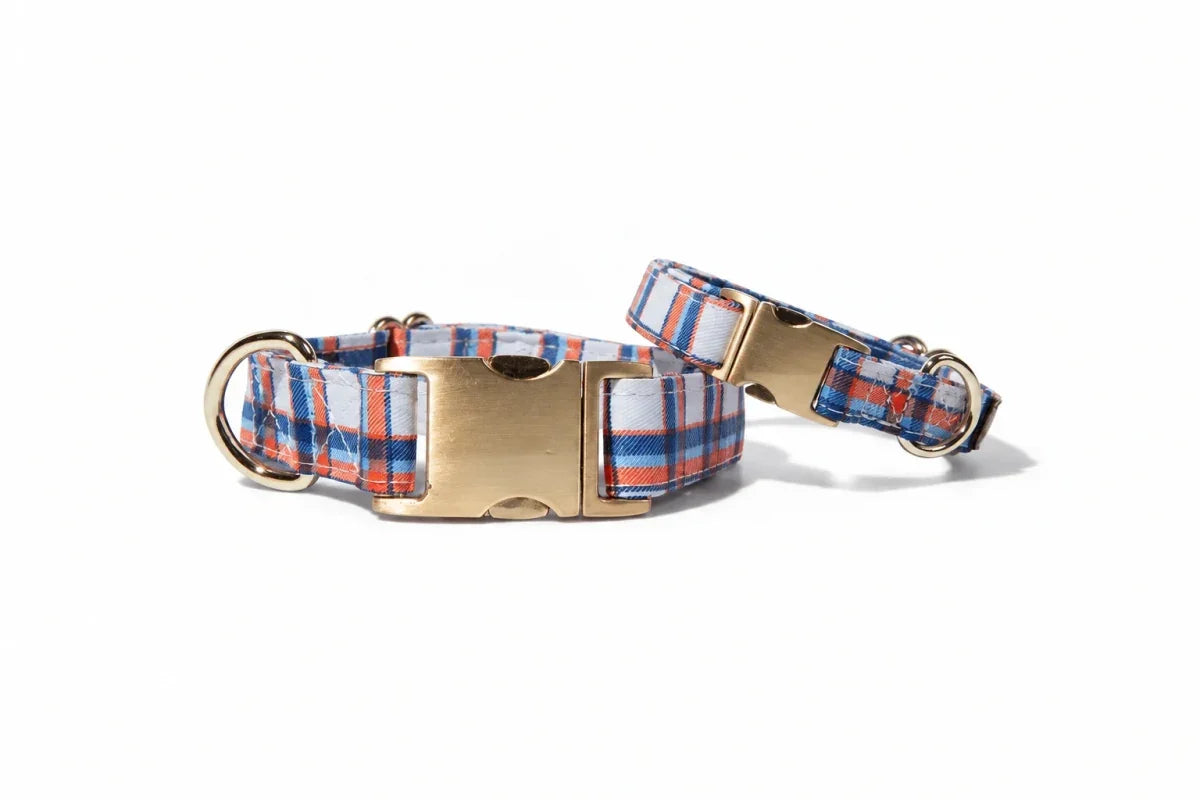
We care how gear feels on your dog as much as how it looks, which is why every one of our dog collars is adjustable, with reinforced stitching and gold hardware. If you're shopping for a tiny companion, browse our small dog collars, and for a bigger buddy, our large dog collars come in the same gorgeous styles.
If you're curious whether that color you love sends a message to other dog owners, take a peek at our guide to dog collar color meanings. Then slide those two fingers under, give it a gentle turn and let your pup show it off.
Frequently asked questions
Is two fingers the only right amount of room?
Two fingers is our go-to starting point, and VCA allows room for two to four fingers on a plain flat collar. Whatever you land on, the collar still has to be snug enough that it can't slip over your dog's head.
How do I do the finger test on a fluffy or thick-coated dog?
Part the fur and press your fingers flat against the neck itself, not on top of the coat. Recheck after grooming or seasonal shedding, since the same setting can feel very different once the fluff changes.