



Do Dogs Like Collars, or Do They Learn to Accept Them?
Some dogs do hate collars, but most learn to tolerate them the way we tolerate clothes. No toddler ever stayed dressed if they could help it, but they all learn that's just how life works when you want to go out in public, and dogs get there too. Once the fit is right and you introduce the collar gently, it becomes as unremarkable to your pup as a favorite sweater is to you.
Plenty of dogs, especially working and sporting breeds, flat-out adore their gear, because it means they're heading out to do their favorite job. Show a hunting dog its GPS collar and watch the happy dance start! A collar still isn't the right tool for every dog, though, and some pups need a little more time (and a few more treats) to warm up to theirs.
Why Some Dogs Like Their Collars
So why do dogs like their collars? Often it's association. If the jingle of a collar means walks, car rides and new smells, many dogs start to perk up the moment they see it. A comfortable, lightweight collar also stops registering after a while, which is about the highest compliment a dog can pay it.
Why Do Dogs Need Collars?
The big reason is identification. With current ID tags on their collar, anyone who finds your lost pup can call you right away, and a microchip doesn't replace those visible tags. A chip needs a scanner, while a tag just needs a kind stranger.

Are Collars Uncomfortable for Dogs?
A well-fitted collar shouldn't bother your dog at all, but a poorly fitted one can. You should be able to slip two fingers underneath, because any tighter and it can rub or pinch, and any looser and your dog can wriggle free.
Puppies grow so fast that a collar that fit on Monday can feel snug by Saturday, so check the fit every week while they're little. Weight changes and a thick winter coat can shift the fit on adult dogs too, so our guide on how to tighten a dog collar is handy to keep bookmarked.
Are Chain Collars Bad for Dogs?
A chain collar isn't bad in itself, but a choke chain is a training tool, so it must never be left on your dog once the session is over, because it can tighten without a limit if it snags on something. Work with a trainer or veterinary behaviorist when you use one, because there's a right and a wrong way to put it on, and a correct and an incorrect spot for it to sit on the neck.

How to Help Your Dog Get Used to a Collar
For a pup who's never worn a collar, the trick is to introduce it slowly and pair it with good things, like this:
- Pick a calm moment at home and fasten the collar with the two-finger fit.
- Give high-value treats right away, so your pup links the collar with good things.
- Keep the first session brief, and take the collar off once your dog settles.
- Repeat over the next few days, adding a little more time each day.
- Once your pup ignores it at home (usually within a week or two), start wearing it on short walks.
A bit of scratching or head shaking at first is totally normal. Most puppies throw a tantrum or two and then forget the collar is there, just like toddlers with their first pair of shoes. Older dogs who've never worn one might need more time, or they might accept it like it's always been there, because every dog is different. If the fussing keeps up, recheck the fit and slow things down.
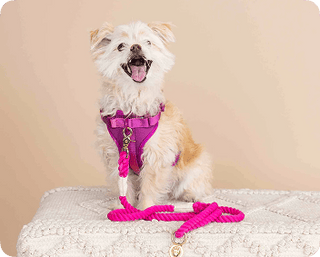
A toddler reaching toward a small dog in a pink harness
When to Take the Collar Off
Can your dog wear a collar to bed? Yes, as long as it's soft and comfy, and a light lounge collar with their ID tags can stay on around the house. If your pup seems restless at night, try taking it off and see whether they settle better.
Take the collar off for unsupervised play with other dogs and for crate time, because a collar that catches on a playmate's tooth or a crate door can twist tight and cause serious injury. After a bath or a swim, let the collar dry completely before it goes back on, since a damp collar can irritate the skin.
Dogs That Pull or Have Neck Problems
If your dog pulls hard or has a neck, tracheal or airway problem, follow your vet's advice first, which usually means clipping the leash to a well-fitted harness for walks. Pop the harness on before you head out and take it off once you're home, unless you're supervising a specific training plan.
Keep the ID tags on your dog's collar, since the harness comes off at home and the tags would come off with it. For strong pullers, our guide to the best collars for big, strong dogs covers what to look for, and our large dog collars come in a 1-inch width for bigger necks.
Choosing a Collar Your Dog Will Barely Notice
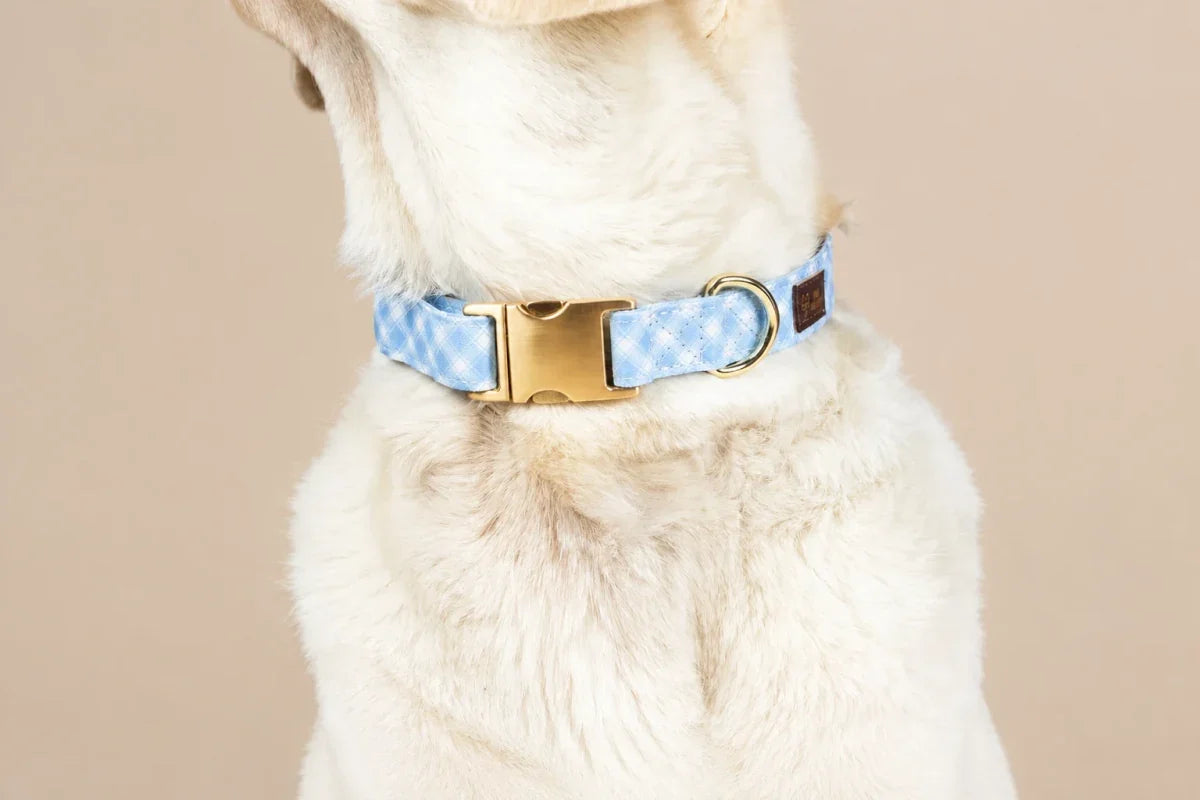
Every one of our dog collars is adjustable, with reinforced stitching and gold hardware, so you can keep up with growth, weight changes or a fluffy winter coat without buying a new one every season.
Waterproof styles suit puddle-loving pups, while velvet and vegan leather feel soft against the neck. Petite pups have their own needs, so take a look at our small dog collars or our roundup of the best dog collars for small dogs, and for a broader look at materials, our good dog collar guide is a great next stop.
Frequently asked questions
What if my dog still fusses with the collar after a few days?
Drop back to the session length where your dog last stayed relaxed, keep the treats extra tasty and work up more slowly from there. Recheck the two-finger fit too, because a collar that's slightly snug can keep the scratching going.
When is it time to replace a collar?
Swap it out once you spot fraying, loose stitching or worn hardware, or when you can't adjust it to a snug two-finger fit anymore. That's often the moment a growing puppy needs the next size up.