



Best Dog Harness for Weak Back Legs: Support and Fit
The best dog harness for weak back legs is a purpose-designed support harness chosen for the part of your dog’s body that needs help. It should give you controlled lifting leverage without replacing the movement your dog can still manage. Because hind-leg weakness can have several medical causes, start with a veterinary assessment and treat the harness as a mobility aid, not a diagnosis or treatment.
Choose a Support Harness, Not Just a Walking Harness
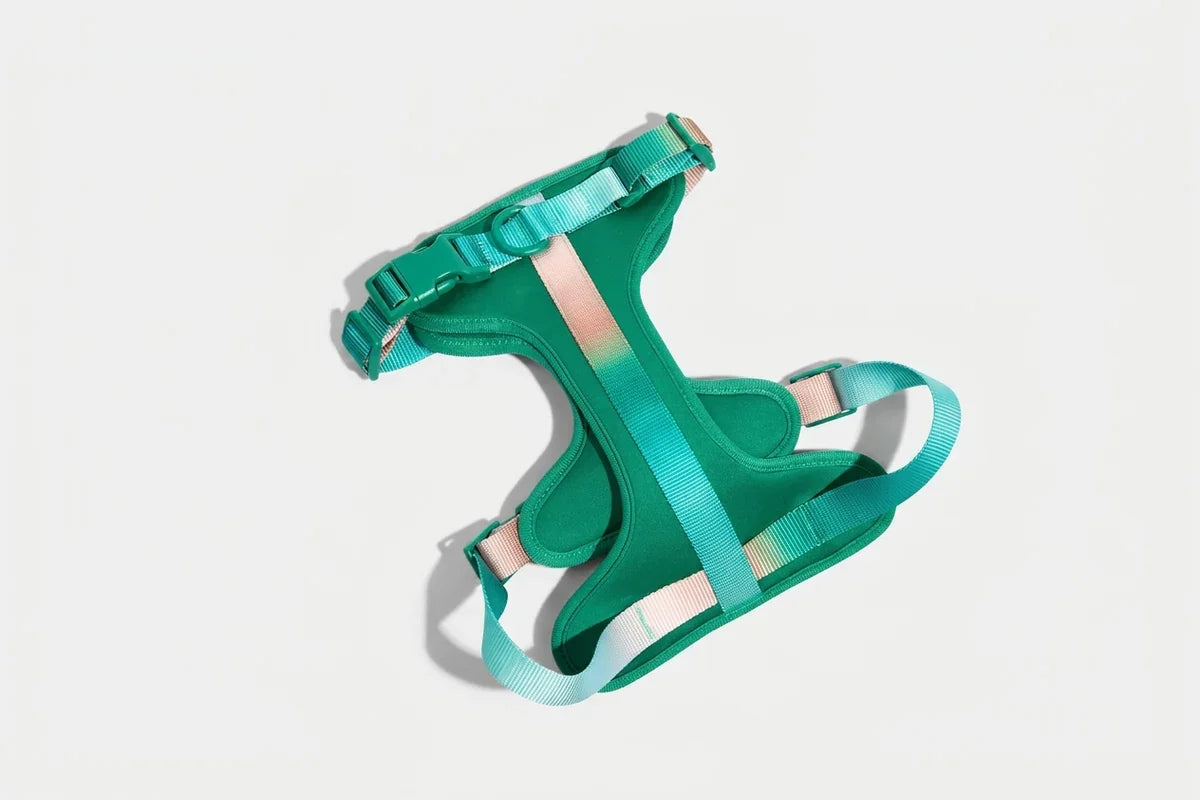
A regular walking harness manages the leash connection. A support harness helps you assist a dog who struggles to stand, climb stairs, walk on hills, or handle another change in elevation. The American Kennel Club’s guide to canine mobility devices also notes that support can act as a balance aid for dogs who can still walk, allowing them to keep using their muscles.
A back handle on an everyday harness can be useful for brief guidance or steadying. It doesn’t automatically make that harness suitable for lifting a dog’s hindquarters. You can compare everyday options in the dog harness with handle collection, but check the individual design and intended use before asking it to support body weight.
If your dog still enjoys ordinary walks and needs separate walking gear, our guide to the best harnesses for dogs explains the main walking styles. Keep that decision separate from the mobility device. One harness does not have to solve every problem.

Match the Harness to the Help Your Dog Needs
Watch the task that has become difficult. A dog who walks comfortably on level ground but needs help rising has a different mobility need from a dog whose back legs cannot keep the body supported. Note whether the trouble appears when standing, using stairs, crossing uneven ground, or completing a short walk. Those concrete details help your veterinarian or rehabilitation professional understand where assistance is needed.
Do not assume that age explains a new change. Hind-leg weakness can come from neurological, orthopedic, or other medical conditions. Back pain, lameness, poor coordination, and loss of walking ability can occur with spinal disease, according to the UC Davis overview of canine disc disease. If any of those signs are present, arrange veterinary care rather than trying to solve the change through equipment alone.
| Your Dog’s Situation | What to Discuss With the Professional |
|---|---|
| Needs occasional help standing or managing steps | Whether a support harness can provide enough leverage while your dog continues walking |
| Has ongoing rear-leg weakness | Whether rear support, full-body support, or another assistive device fits the condition |
| Is a large or heavy dog | A setup you can grip and control without unsafe or awkward lifting |
| Has three legs | How the missing limb affects balance and whether extra device training will be needed |
For a senior dog, comfort and ease of handling matter, but “senior” is not a harness type. The best lift harness for an older dog is still the one matched to that dog’s movement and fitted correctly. The same applies to large dogs. Size alone cannot tell you whether rear-only or broader support is appropriate.

Check Fit Where It Matters in Motion
An improperly fitted mobility device can cause discomfort or injury, so fit should be checked while your dog is standing and moving. Look for twisting, shifting, or a panel that bunches against the body. Assistance should feel controlled rather than jerky, and the device should stay in position during the exact task where you plan to use it.
Putting the harness on also matters. If lifting paws or passing equipment over the face is difficult, tell the professional helping with the fit. Our guide to dog harnesses that don’t go over the head can help with ordinary walking-harness formats. A dog vest harness collection is another place to compare everyday walking designs when a support device is not being used.
Weak or unsteady dogs may also back up or shift their weight unexpectedly. Fit remains your first line of control. If escape prevention is a separate concern during regular walks, use our guide to harnesses dogs can’t easily slip out of to compare secure walking setups. Do not tighten mobility gear excessively in an attempt to make it escape-proof.
Your dog may still pull when excited, even if their back legs are weak. That is a different equipment decision. Our guide to the best harnesses for dogs that pull covers walking control, while the no-pull dog harness collection lets you compare options for that specific job.

Build the Harness Into a Wider Mobility Plan
A helping harness works best when everyone handling your dog uses it in the same way. Ask the fitting professional to demonstrate where to hold it, how much assistance to give, and how your dog should be positioned before you lift. Practice first in a calm, level area rather than introducing the equipment for the first time at a staircase or vehicle.
Veterinary rehabilitation can address impaired mobility linked to weakness, orthopedic injury, neurological dysfunction, arthritis, or age-related limitations. A program may combine assistive devices with therapeutic exercise, balance work, and gait retraining, as outlined by the UC Davis Sports Medicine and Rehabilitation Service. That gives the harness one clear role within a plan built around how your dog currently moves.
If ordinary walking gear is still part of that plan, browse the dog harness collection only after you know what your mobility device is meant to do. A daily walking harness, a rear-support aid, and a wheelchair solve different problems, even when the same dog eventually uses more than one.
Frequently asked questions
Can a Regular Dog Harness Be Used to Lift Weak Back Legs?
A regular walking harness is not automatically suitable for lifting. A purpose-designed support harness provides leverage for mobility assistance, while an ordinary handle may be intended only for brief guidance or steadying.
What Is the Best Harness for a Three-Legged Dog?
The right harness depends on which limb is missing, how the dog balances, and what activity requires help. A veterinary rehabilitation professional can assess movement and recommend an appropriate device. Three-legged dogs may need additional training if a wheelchair is selected.
When Might a Dog Need a Wheelchair Instead of a Lift Harness?
A rear-support wheelchair may be considered when the back legs cannot adequately support the body. Wheelchairs and braces need careful assessment and fitting because the wrong device or fit can cause discomfort or injury.
Is a Lift Harness a Treatment for Hind-Leg Weakness?
No. A lift harness is an assistive device, not a treatment or a way to determine the cause of weakness. Veterinary care is needed to evaluate the underlying neurological, orthopedic, or other medical issue.