



Best Harnesses for Dogs That Pull
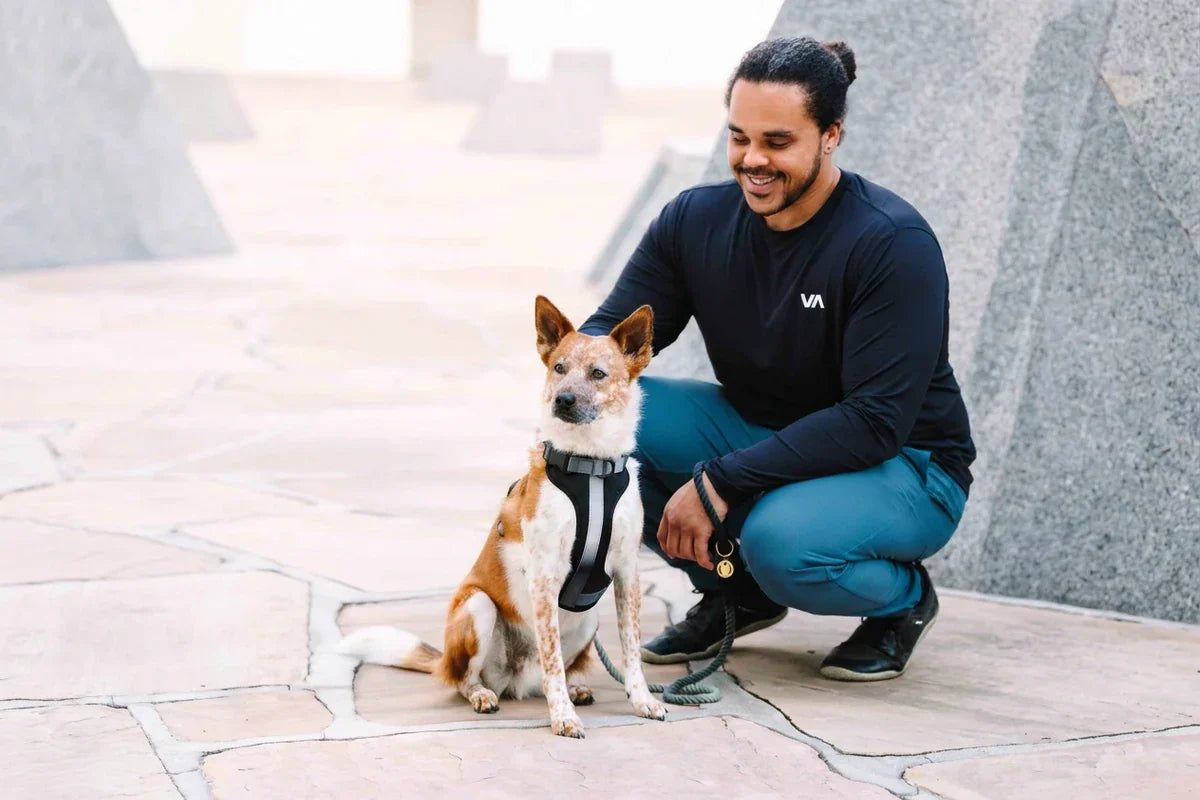
The best harness for a dog that pulls has a front leash attachment, or both front and back attachments, plus enough adjustment to stay centered as your dog moves. Choose a shape that clears the throat and shoulders, then treat fit as seriously as the clip position. A clever design cannot help much if it twists, gaps, or rubs halfway through the walk.
Start With the Leash Attachment
A front attachment is my practical starting point for a persistent puller. Because the leash connects at the chest, you have directional control when your dog moves ahead. A back attachment is convenient for an easy walker, but using only a back ring does not address the reason you are changing harnesses in the first place.
A dual-clip design gives you more flexibility. You can use the front ring when control is the priority and the back ring when your dog is walking calmly. If you want to compare designs made for this job, browse the no-pull dog harness collection. For a closer comparison of this category, see our best no-pull dog harness guide.

Match the Harness to Your Dog
Strong dogs need more than a chunky-looking harness. Focus on secure buckles, sturdy leash rings, balanced straps, and adjustments that let you fit the neck and chest separately. Added bulk does not automatically give you better everyday control. A useful design should stay in place without making your dog move around unnecessary material.
Body shape matters too. A broad-chested dog may need different neck and girth settings, while a narrow-waisted dog may create more room for a loose harness to slide. If backing out is the main concern, use our guide to harnesses dogs can’t slip out of to keep escape resistance separate from ordinary pulling control.
How the harness goes on also affects your daily routine. Some dogs dislike anything passing over their face, while others would rather not have their paws guided through loops. A step-in shape avoids the overhead motion altogether. Our guide to dog harnesses that don’t go over the head explains that option in more detail. You can also compare the wider dog harness collection once you know which entry style suits your dog.

Check the Fit Before the First Full Walk
Measure your dog rather than choosing from weight or breed alone. Start around the widest part of the rib cage, then compare that number with the size chart for the specific harness. Once it arrives, adjust it while your dog is standing naturally. The straps should lie flat without twisting or leaving obvious gaps.
- Slide two fingers under each strap. They should fit with a little resistance rather than moving through a pocket of extra space.
- Keep the neck section below the throat so the harness does not ride forward when the leash becomes tense.
- Position the girth strap behind the front legs, away from the softer armpit area.
- Check that the chest ring stays centered instead of rotating toward one shoulder.
- Watch your dog walk and turn. The front legs should move normally, and the straps should remain flat.
- Apply gentle pressure from different directions in a secure area to see whether your dog’s head or body begins to slide through an opening.
Make one adjustment at a time, then walk for a few minutes and check again. Pulling changes how every section sits. A harness that looked beautifully centered in the kitchen may rotate once your dog spots something exciting at the end of the block. Fit in motion gives you the useful answer.

Choose Control You Can Use Comfortably
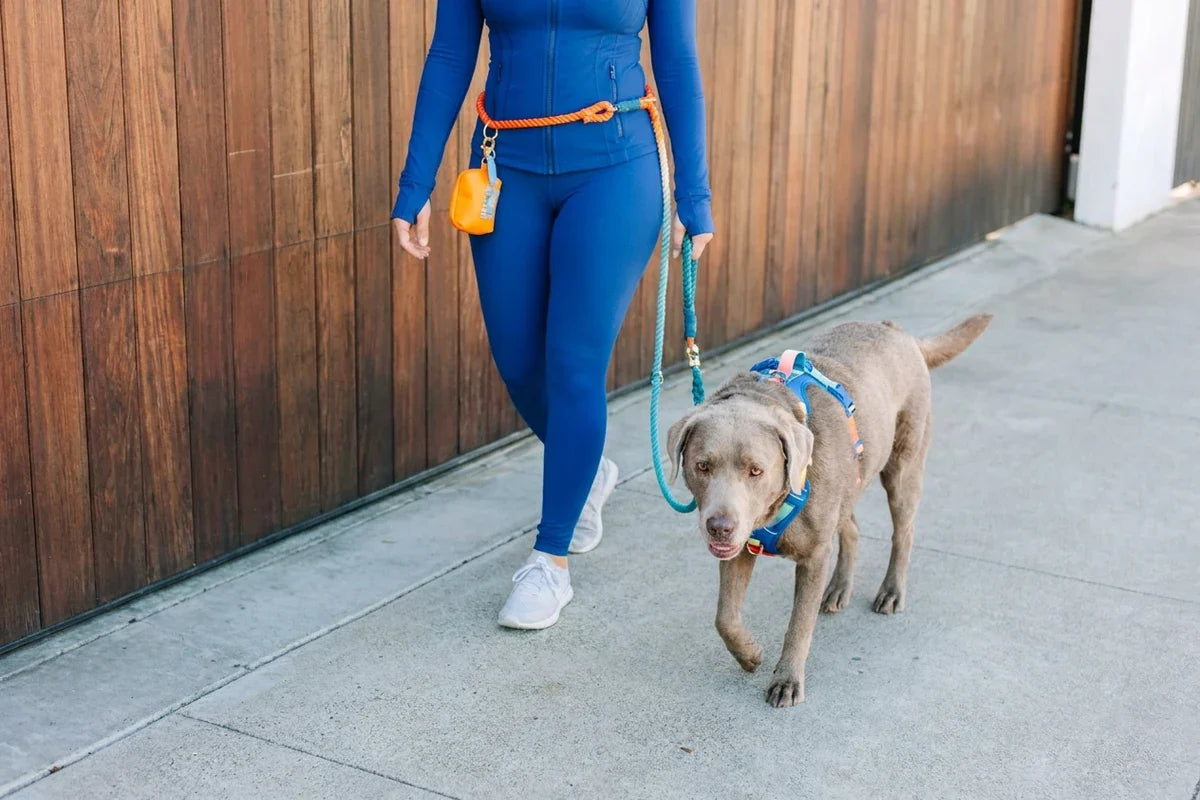
Your leash setup should let you keep a steady connection without wrapping the line around your hand or constantly rearranging your grip. The best option depends on where you walk and how much active guidance your dog needs. A standard handheld leash may feel simpler in busy spaces. Hands-free leashes for dogs may suit walks where you want the attachment secured around your body while keeping your hands available.
The harness manages the physical part of the walk. It does not teach loose-leash habits by itself. Give your dog room to succeed, keep your handling consistent, and avoid expecting a new clip position to transform the whole outing on day one. The gear should make your work more manageable while those walking habits develop.
Know When Pulling Is Not the Only Need
Some dogs need physical assistance as well as leash control. If your dog has trouble standing, climbing, or supporting the back end, an ordinary front-clip walking harness answers a different problem. Our best dog harness for weak back legs guide focuses on supportive designs rather than treating every need as a pulling issue.
For an otherwise comfortable puller, keep watching the harness after the purchase decision is over. Take it off after the walk and look at the contact areas around the chest, neck, and front legs. Loose seams, fraying straps, shifting buckles, or a fit that no longer stays centered mean the setup needs attention before the next outing. Your dog’s body and the condition of the gear matter every time you clip in.
Frequently asked questions
Can a Puppy Use a No-Pull Harness?
A puppy can use a properly fitted no-pull harness, but the fit needs frequent attention as the puppy grows. Recheck every strap regularly and replace the harness when its adjustment range no longer leaves a secure, comfortable fit.
What Should I Do if My Dog Pulls Harder in a New Harness?
Pause and check whether the harness has rotated, ridden toward the throat, or loosened around the chest. If the fit remains stable, introduce the new setup during shorter, quieter walks while your dog gets used to the different leash position.
Can I Use a Walking Harness in the Car?
Do not assume an everyday walking harness is suitable as a vehicle restraint. Use equipment specifically intended and tested for that purpose rather than relying on a leash ring or ordinary tether attachment.
Should My Dog Wear the Harness All Day?
Use the harness for walks and supervised activities, then remove it during rest, sleep, crate time, and unattended periods. Taking it off also gives you a chance to inspect the skin, coat, straps, and hardware.