



Dog Harness That Doesn't Go Over the Head: Fit Guide
A step-in harness is the style to choose when you don’t want anything passing over your dog’s head. Your dog places both front feet into the openings, then the harness comes up around the body and fastens on the back. It’s a simple change that can make getting ready much less awkward for dogs that are sensitive around the face, ears, or neck.
How a Step-In Dog Harness Works
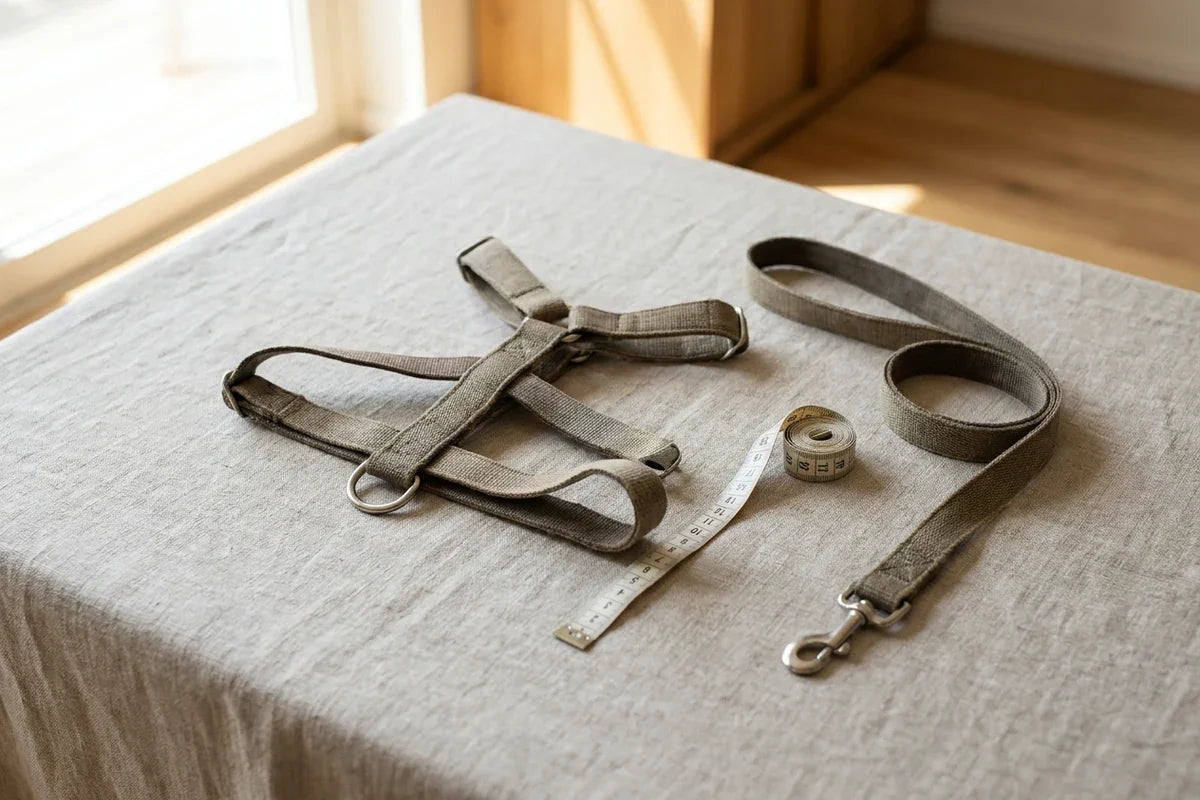
The entry method is what sets this harness apart. Instead of guiding your dog’s nose and ears through a neck loop, you lay the harness open, place one front foot in each opening, lift the sides, and secure the closure across the back. Once you recognize that layout, it’s easy to separate a true step-in design from an overhead harness.
A step-in style can be especially useful when your dog reacts to contact near the head or has pain involving the ears or neck. The American Kennel Club’s guide to choosing the right dog harness also recommends measuring at the base of the neck and around the widest part of the chest, which is usually behind the front legs. Those measurements give you a better starting point than choosing from a breed label alone.
Entry style and body style aren’t always the same thing. If you prefer the look and coverage of a vest, browse the dog vest harness collection, then confirm that the specific design uses a step-in opening rather than an overhead neck loop.

Choose for the Walk You Actually Take
Once you’ve narrowed the choice to a head-free entry method, think about what happens after the buckle clicks. A calm neighborhood walker and a dog that leans hard into the leash may need different attachment options. You can compare available shapes and setups in the dog harness collection without losing sight of the step-in requirement.
If pulling is the main challenge, look separately at the leash connection and control features. A step-in opening describes how the harness goes onto your dog, not how it responds when the leash becomes tight. The no-pull dog harness collection is the relevant place to compare that function, while our best no-pull dog harness guide goes deeper into that specific walking need.
Dog size deserves its own decision too. A harness still has to match the individual chest and neck measurements, even when the package names a general size category. If you’re sorting through proportions and available fits, use our best harnesses for small dogs guide or our best harnesses for big dogs guide as the more focused next step.
How to Prevent Rubbing Under the Front Legs
A head-free design doesn’t automatically prevent rubbing. The girth strap still needs to sit clear of the armpits and the backs of the elbows. If it presses into those areas, normal front-leg movement can keep bringing the same skin and fur against the strap.
Position matters as much as softness. According to the American Kennel Club’s dog harness fitting guide, the girth strap shouldn’t squeeze into the elbows or sit behind the rib cage toward the stomach. Your dog should also be able to extend the shoulders and move the front legs without the harness restricting them.
Check the harness while your dog is standing naturally. Look at both sides rather than adjusting from only one angle. The chest section should remain centered, the straps should lie flat, and the girth strap should stay out of the underarm area instead of creeping forward.
- Choose the size from your dog’s actual neck-base and chest measurements.
- Adjust both sides so the harness sits evenly instead of rotating toward one leg.
- Watch the strap position as your dog takes several normal steps.
- Stop and readjust if a strap pinches near an elbow or slides into an armpit.

Put the Harness On Without a Tangle
Step-in harnesses look a little confusing when the straps are folded together, so open the harness fully before bringing your dog over. Identify the two front-foot openings and the back closure. This prevents a twisted strap from ending up against the chest or under one leg.
- Lay the open harness flat with the two foot openings clearly separated.
- Place one front foot inside each opening.
- Lift both sides of the harness along your dog’s body.
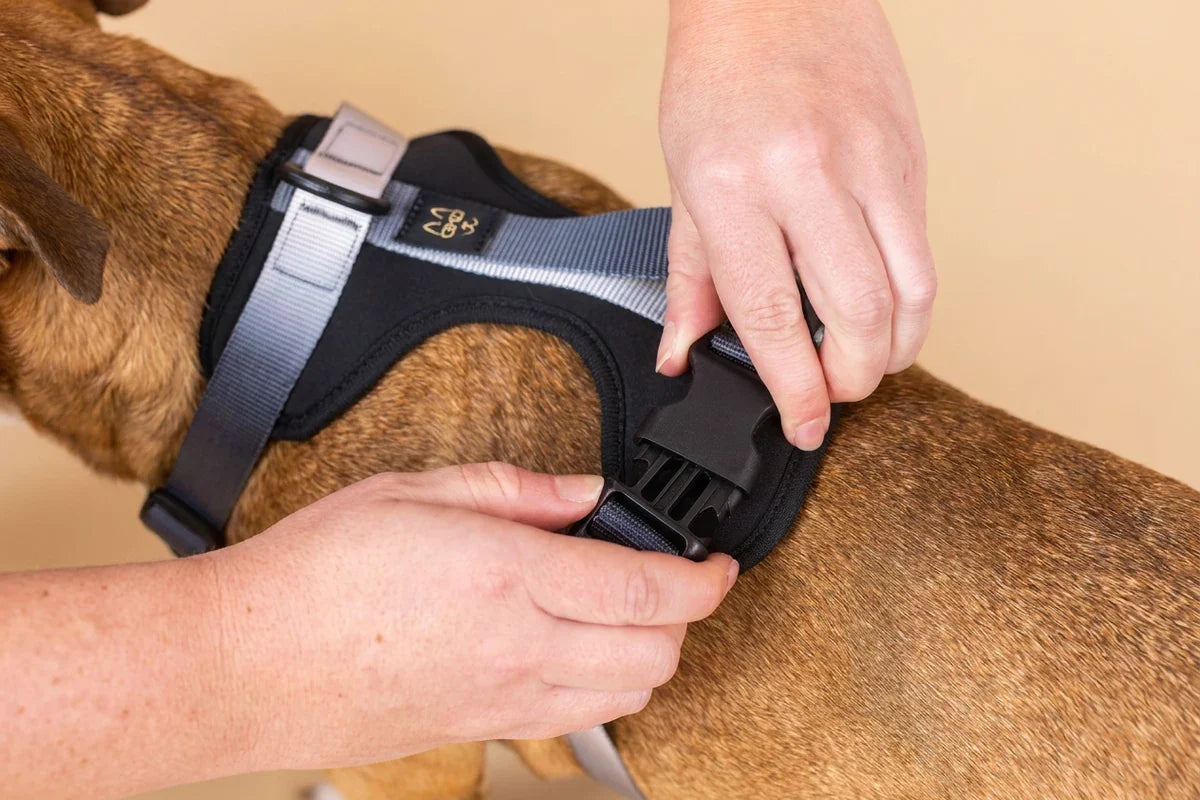
- Fasten the closure on the back without trapping fur in the buckle.
- Adjust the straps until the harness is snug but not uncomfortably tight.
Let your dog stand and walk around indoors before attaching the leash. You’re looking for a harness that stays centered while the legs and shoulders move freely. If it shifts sharply to one side, slides toward an elbow, or leaves a strap sitting in the underarm area, adjust it before heading outside.

Head-Free Doesn’t Mean Slip-Proof
A dog can still back out of a step-in harness when the fit leaves too much room. Pull gently in different directions during the indoor fitting and pay particular attention to what happens when your dog moves backward. The harness shouldn’t have enough space to travel forward and pass over the head.
Dogs that regularly reverse, twist, or test their walking gear need a fit chosen with that behavior in mind. Our guide to harnesses dogs can’t slip out of covers that security-first decision in more detail. For a head-sensitive dog, the right choice has to satisfy both needs: comfortable step-in entry and a fit that stays in place when the dog backs up.
Frequently asked questions
Is Every Step-In Harness Escape-Proof?
No. A dog may back out of an improperly fitted step-in harness. The harness should stay secure when gently pulled in different directions and should not have enough room to move forward over the dog’s head.
When Should I Recheck My Dog’s Harness Fit?
Recheck the fit after grooming or any noticeable weight loss or gain. Changes in body shape or coat thickness can alter where the straps sit.
Can a Vest Harness Avoid Going Over the Head?
Yes, if it has a step-in entry. Some vest harnesses use an overhead opening, so check how the individual design goes on rather than relying on the word “vest.”
Does a Step-In Harness Stop Leash Pulling?
Not automatically. “Step-in” describes how the harness goes onto the dog. Pulling control depends on the harness design and where the leash attaches.