




Can You Harness Train an Adult Cat? A Calm Step-by-Step Guide
Yes, you can, and plenty of people do it with cats who are well into adulthood. It takes longer than it does with a kitten, and the goal isn't a cat who heels along the sidewalk. What you're after is a cat who'll wander round the yard on a leash without panicking.
Do all of the early work indoors. Your cat already knows every smell in the house, so that's where the harness should stop being strange, and a few minutes a day is plenty. Some adult cats are comfortable within a couple of weeks, others take a month or two, and a few decide it isn't for them, which is also a perfectly good outcome.
Step-by-Step Guide to Training an Adult Cat
Work through these indoors, at your cat's pace (unless you fancy stitching up the curtains, the back of the couch, the dog's ear and both your hands). Most of it is repetition and exposure anyway, rather than technique.
- Leave the harness where your cat sleeps. Let them sniff it in their own time, and drop a treat beside it whenever they do. A few days of this is normal.
- Lay it over their back for a moment. No fastening yet, just the weight of it, then a treat and straight off again. Give this several weeks before a leash comes into it, which is what vets suggest for a cat who's new to the idea.
- Do it up and feed them through it. Close the neck panel, then the body panel, and keep a lickable treat going while you do. Check the mesh is flat against their coat and not bunched in their armpits, then take it off after a minute while your cat is still relaxed.
- Let them walk around in it. No leash yet. Get a wand toy out and play, because a cat who's chasing a feather forgets what they're wearing. Once they're moving normally, clip the leash on and let it trail behind them while you watch.
- Pick the leash up and follow. Keep it slack, stay behind your cat, and let them choose the route. Give them treats for going forward if they'll take them, and never give the leash a tug to get them moving. That's the express lane to a cat who nopes out of the situation in the most acrobatic way possible.

Selecting the Right Gear and Securing the Fit
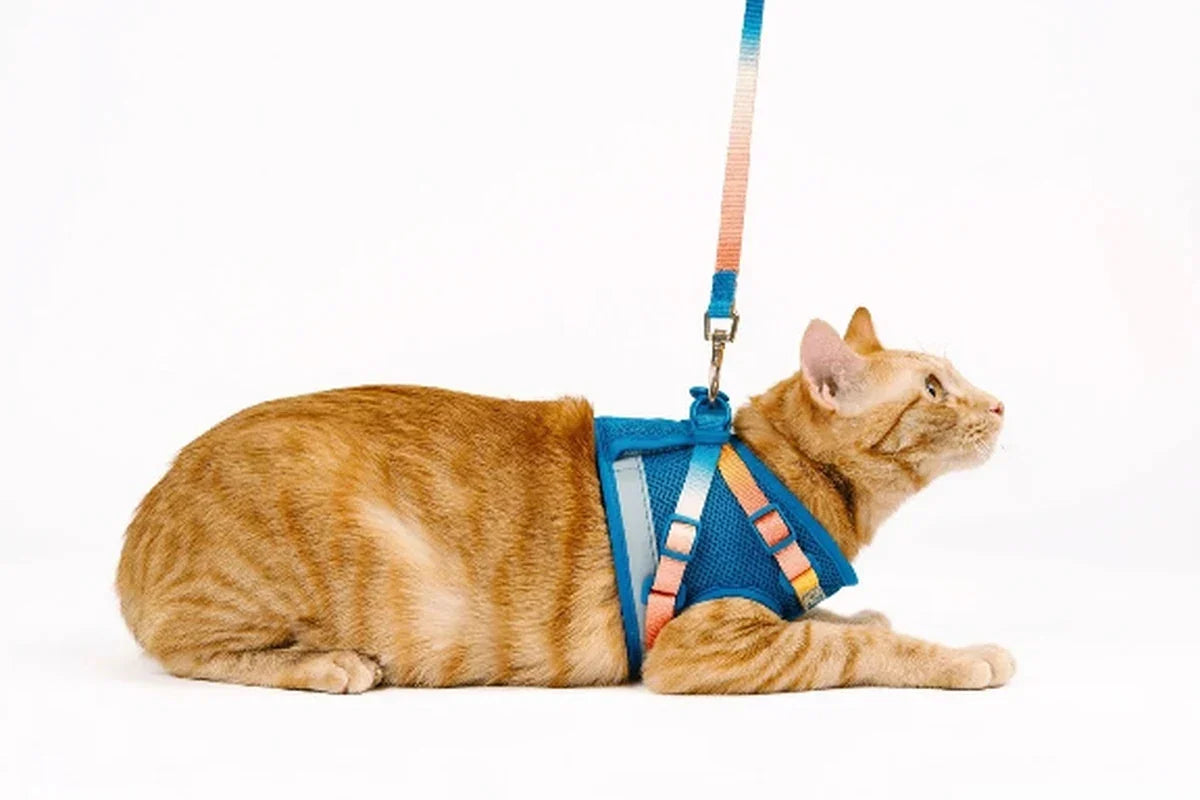
Start with a harness made for a cat. A collar is the wrong thing entirely, since a cat can slip one too easily when they panic, and all of the force ends up on their throat while they're doing it. A dog harness is the other wrong answer, because it leaves gaps under the front legs where a dog's shoulders would fill it out, and a cat backs out through those gaps.
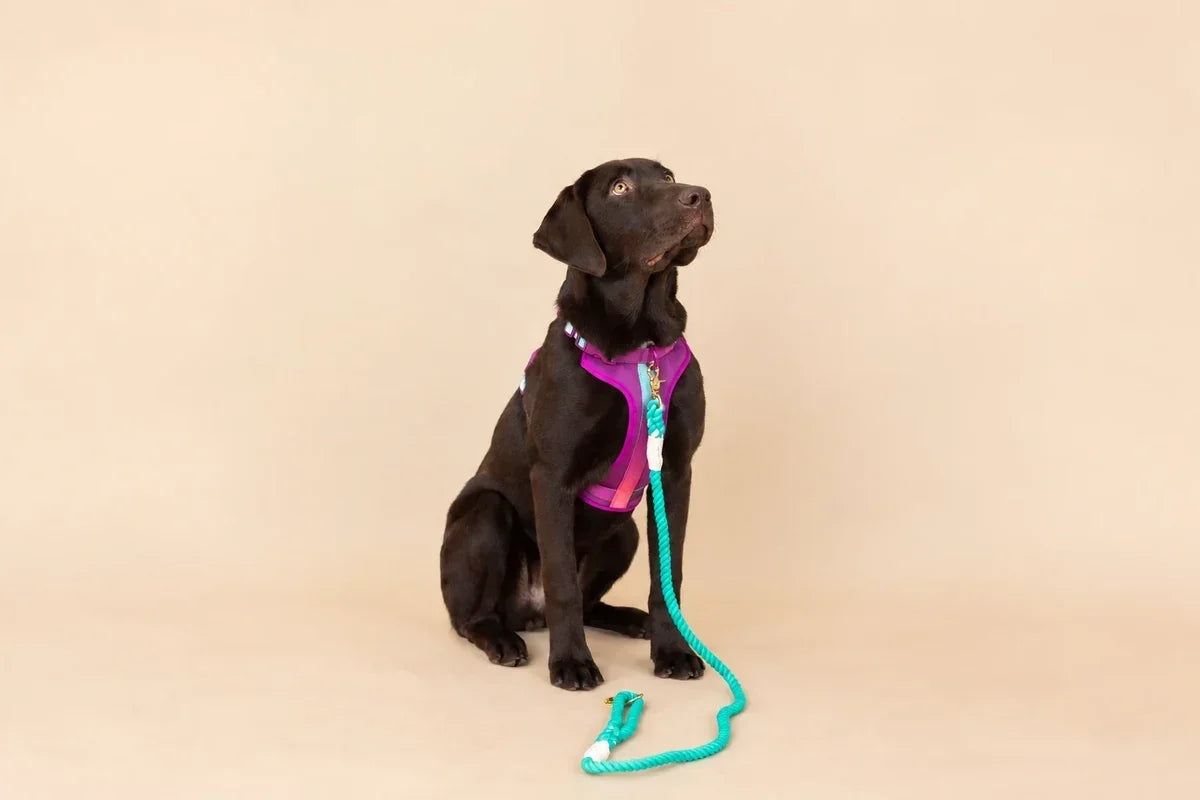
It works in the other direction, though. If you've got a very small dog, or a wriggly one who gets out of everything, or a little dog who shouldn't have any pressure on their neck, one of our cat sets can suit them better than a small dog harness or a medium dog harness. Bear in mind there's no front ring and no handle on a cat set, so it's for comfort and coverage rather than for a dog who pulls.
Get the size right before any of the training starts. You need your cat's chest, measured just behind the front legs, and their neck, and our guide on measuring a cat for a harness covers how. Our cat harness and leash sets come in small, medium and large.
Then check the fit again once your cat has moved around in it, since mesh settles and cats slump. Two flat fingers under every strap, and no gaps at the neck or the shoulders. Our guides on putting on a cat harness and escape-proof cat harnesses have the checks in full.

Reading Feline Body Language and Managing the Flop
Don't be surprised if your cat flops over and dramatically pretends that their bones have all melted. You do the harness up, they take two steps, and down they go. Almost every cat does some version of it, and almost all of them stop within a few sessions.
What gets them moving again is having somewhere to go. Roll a treat a short way across the floor, or get a wand toy out and give it a shake at head height. Don't loom over your cat during this stage, since that can actually make them less likely to move. Back off a step and give them a reason to get up.
Leave the leash out of it while this is going on, and never pull. A cat who gets dragged forward in a harness learns that the harness is an unpleasant experience and to avoid it.
Some cats are telling you something different, though, and you'll know it by the other signals. A cat who flattens their ears, twitches the end of their tail or grooms frantically has gone past uncomfortable. Undo the harness, let them go, and pick it up tomorrow one step earlier than where you got stuck.

Transitioning Safely to Outdoor Exploration
When your cat is walking around indoors on a slack leash, you're ready to try outside. Harness on, leash clipped, cat in the carrier, and keep hold of the leash while you carry them out. A cat who's spooked by the front door is a cat you want already attached to you.
Put the carrier down somewhere quiet, open the door and wait. Some cats head straight for the flower beds while others sit and watch the birds, and both count as a successful first trip. Don't tip them out or lift them out.
Ten minutes is a long first outing. Stay in the yard, skip the retractable leash, and if a dog turns up or your cat starts heading for a fence, put them back in the carrier and go inside. Our guide to walking a cat takes it from there once your cat is settled outdoors.
Frequently asked questions
Is My Cat Too Old to Start?
Probably not. Age matters less than temperament, and a confident twelve-year-old often takes to it faster than a nervous two-year-old. Keep the sessions shorter if your cat is stiff or arthritic, and ask your vet first if they've got joint trouble, since a harness shouldn't be going on a cat who finds moving uncomfortable.
How Do I Know the Harness Is Restricting Movement?
Watch the front legs. Your cat should stride normally and breathe easily, and if they're taking short, choppy steps or holding a leg out to the side, the straps are sitting too far forward. Refit it rather than loosening everything off, since a loose harness brings its own problem.
Where Should We Practice With the Leash Indoors?
Somewhere open, with no stairs, and nothing the clip can snag on. A hallway or a living room works. Stay with your cat the whole time the leash is trailing, because a leash caught round a chair leg can frighten a cat badly enough to set you back weeks.
My Cat Used to Go Outside and Now Cries at the Door. Will a Harness Fix That?
Sometimes, though not always in the way you'd hope. Some cats settle once they get regular time outside on a leash. Others find the harness frustrating compared with the freedom they remember, and get more vocal rather than less. Give it a few weeks, and if your cat seems worse rather than better, more play and window space indoors tends to help more than pushing the walks.