



How Do You Measure a Cat for a Harness? A Practical Fit Guide
Measuring your cat for a harness takes two numbers. Wrap a soft tape around their chest, right behind their front legs, then around their neck, low down where it meets their shoulders. The chest number picks your size, and the neck number tells you whether a harness has enough adjustment for your cat.
In theory that's a two-minute job. In practice you're holding a tape measure around a cat who's decided that this isn't happening. A crouching cat measures smaller than they really are, so you end up with a harness that won't do up or that rubs under their legs. Pull the tape too loose and you get the opposite problem, which is a harness your cat can reverse out of. Wait until yours is settled after a meal, keep them standing on all four paws, and take the chest measurement two or three times until you get the same number twice.
Preparing Your Cat for Accurate Measurements
Get everything ready before you pick your cat up. You want a soft tape measure, a treat, and something with a bit of grip for your cat to stand on, like a towel over the counter.
If yours won't hold still, make it a two-person job. One of you holds a lickable treat at their nose while the other runs the tape, and you'll usually have the number before the treat's finished.
If you don't own a soft tape, use a ribbon or a shoelace instead. Wrap it around your cat, pinch the spot where the ends meet, then hold that length against a ruler. A metal tape from the toolbox won't sit flat against a cat, so leave that one in the toolbox.
How to Measure a Cat for a Harness
- Measure the chest. Wrap the tape around the widest part of your cat's chest, just behind their front legs, and keep it flat against their fur. Snug it up until you can just slip a finger under the tape. That's the tape, not the harness, so don't confuse it with the two-finger rule you'll use once the harness is on. Write the number down.
- Measure the neck. Move the tape down to the base of their neck, where a collar would sit, not up under their chin. Keep it snug against the fur rather than tight.
- Weigh your cat if you want a cross-check. Stand on the bathroom scale holding them, then weigh yourself and subtract. Use the number as a sanity check and nothing more, since two cats at the same weight can be built completely differently.
Some long vest harnesses ask for a belly measurement as well, taken about two inches behind the front legs. Ours don't, so if you're sizing one of our sets, the chest and neck numbers are all you need.

Matching Measurements to Harness Styles and Sizes
Go by the chest number first. That's the strap your cat pulls against on a walk, so when it fits, the harness stays where it should instead of sliding round them.
If your cat falls between two sizes, take the bigger one. You can tighten a harness that's slightly big, and you'll want that spare adjustment when a winter coat comes in. What you can't do is let one out past the end of its straps.
Our cat harness and leash sets come in small, medium and large, and each size lists the chest and neck range it covers, so you're matching numbers rather than guessing. If your cat sits at the very top of the large, message us before you order and we'll tell you what we'd do.
The shape matters as well as the size. A vest covers more of your cat and suits a nervous one, while a strap harness is lighter and easier in warm weather, and our guide to the types of cat harnesses compares them properly.

Fitting and Testing the Harness at Home
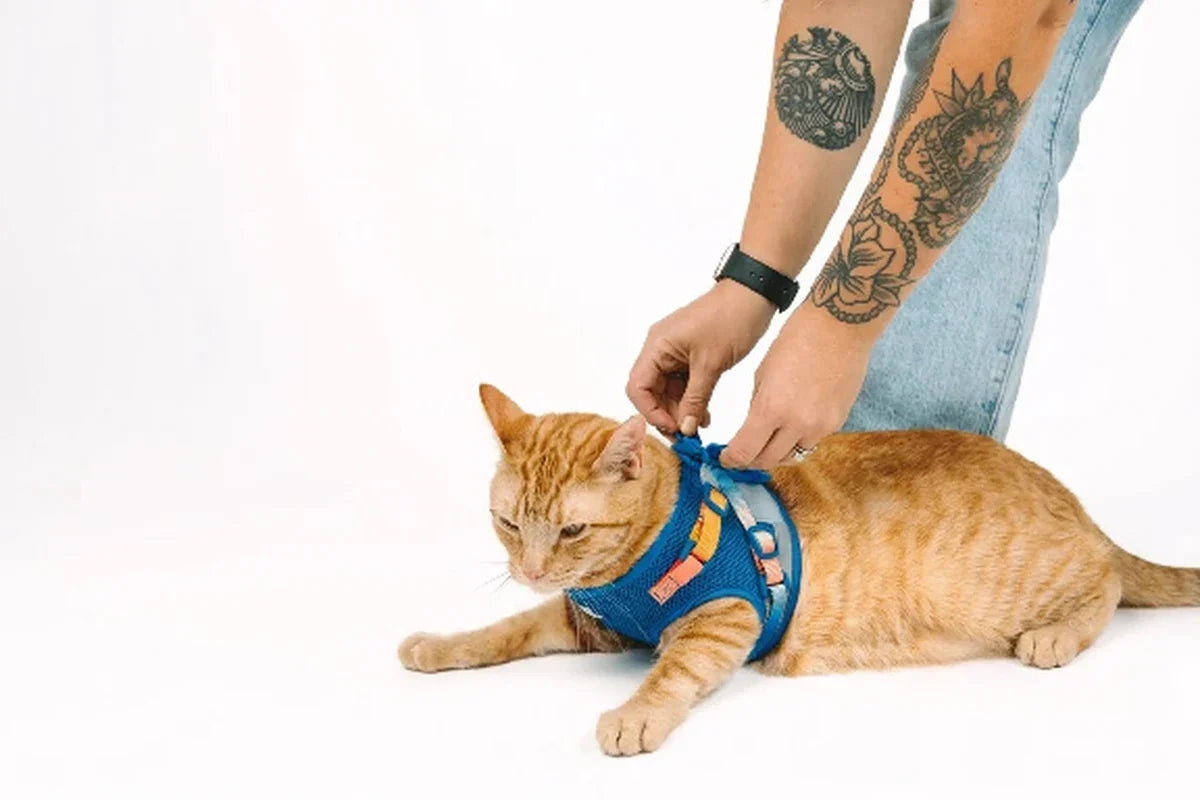
Put the harness on in a quiet room at home, and take your time with the first go. Fasten the neck, then the strap behind the front legs, and adjust both until you can slide two flat fingers underneath each one. Our guide on putting on a cat harness covers the order and what to do if your cat objects.
Then watch them move before you clip a leash on. A cat who walks, sits and turns around normally has a harness that fits. A cat who flops onto their side, crawls, or freezes on the spot usually has one that's too tight across the shoulders, so loosen the front and watch again.
Check for gaps while they're moving, especially when they crouch, since that's when the neck opening loosens off. If you can get a whole hand under a strap, or the harness slides round when your cat turns, take up the slack evenly on both sides. Our guide to escape-proof cat harnesses goes further into the escape checks.
Once the fit is right, build up indoors before you go out. Five minutes at a time with treats is plenty, and our guide to harness training an adult cat has the pace to work at if your cat isn't a kitten. Take the harness off when you're done, since a strap can hook on furniture while you're out of the room.

Frequently asked questions
How Do I Measure a Cat With Thick Fur?
Press the tape gently through the coat until you can feel your cat's body underneath, then read the number there. If you measure the fluff, you'll get a number that's bigger than your cat, and the harness you order will be loose enough for them to back out of. Long-haired cats also need a recheck after a groom or a big shed.
What If the Neck and Chest Point at Different Sizes?
Go with the size that fits the chest, then check that the neck strap on that size adjusts down far enough for your cat. Most do. If the neck can't come in enough, the shape isn't right for your cat and another one will suit them better.
Do Sizes Mean the Same Thing on Every Harness?
No, and this catches people out. One brand's medium can be another brand's small, so measure once and then check your two numbers against the chart on whatever you're buying, every time.
How Often Should I Measure Again?
Once or twice a year for an adult cat, and any time their weight changes or a winter coat comes in. Kittens need it more often, since they'll outgrow a size in a few months.