



Best No Pull Dog Harness: Fit and Control Guide
The best no-pull dog harness fits your dog’s actual shape, stays clear of the throat and elbows, and gives you a useful leash connection for walks. For a dog that regularly pulls, I’d start with a front-clip or dual-clip design, then let fit and comfort make the final decision.
What Makes a No-Pull Harness a Good Choice?
A no-pull harness helps you manage forward pulling by changing where the leash connects. A chest connection gives you a different angle than a ring centered on the back, while a dual-clip harness lets you choose between the two positions. That extra flexibility can be useful when your dog’s walking manners depend on the setting.
The harness still needs to suit your dog. A highly rated design can be a poor match if its straps sit in the wrong places or its adjustment range doesn’t fit your dog’s proportions. Instead of treating reviews as the whole answer, compare the design with the body standing in front of you. The no-pull dog harness collection is a practical place to compare this type of walking gear.

Choose by Body Shape, Not the Size Label
Small, medium, and large are useful shopping categories, but they don’t tell you how a harness will sit. Two dogs at a similar weight may have very different neck and chest proportions. Measure the base of the neck where it meets the shoulders and the widest part of the chest, then compare both numbers with the specific size chart.
The AKC’s harness selection guidance recommends using those measurements and adjusting the harness until it is snug without becoming too tight. This makes the dog’s build, rather than a broad breed or weight label, the deciding factor.
For more size-specific shopping help, compare our guide to the best harnesses for small dogs or our guide to the best harnesses for big dogs. A medium dog follows the same basic rule. Use measurements first, then check whether the available adjustment points match the neck and chest together.

Comfort Comes Down to Fit
The most comfortable no-pull harness is the one that stays in position without pinching or interfering with your dog’s normal movement. The neck opening should rest near the top of the sternum, which is the firm area at the upper chest, rather than circling the throat. Straps also need enough clearance behind the front legs to avoid rubbing at the elbows.
Once the harness is adjusted, watch your dog walk rather than judging it only while they stand still. The shoulders and legs should move normally, and the body of the harness shouldn’t rotate as the leash changes direction. These checks follow the AKC’s well-fitting harness guidance, which emphasizes a snug fit without pinching, rubbing, throat placement, or restricted gait.
If you prefer broader fabric coverage rather than a mostly strapped design, compare options in the dog vest harness collection. Whichever style you consider, the panel and straps still need to follow the same fit rules. More fabric cannot make up for the wrong size or poor placement.

Match the Harness to the Walk
Your usual walk should shape the choice. A front connection is the clearest starting point for regular pulling. A dual-clip design gives you another attachment option when you want a different setup, while an ordinary back connection may be all a calm walker needs. You can compare the wider range in the dog harness collection if you’re still deciding among styles.
Large and strong dogs don’t need a no-pull harness chosen on size alone. They need a measured fit with adjustment that keeps the harness centered. If a handle is also useful for the way you guide your dog, browse the dog harness with handle collection separately rather than assuming every no-pull design includes one.
Consider How the Harness Goes On
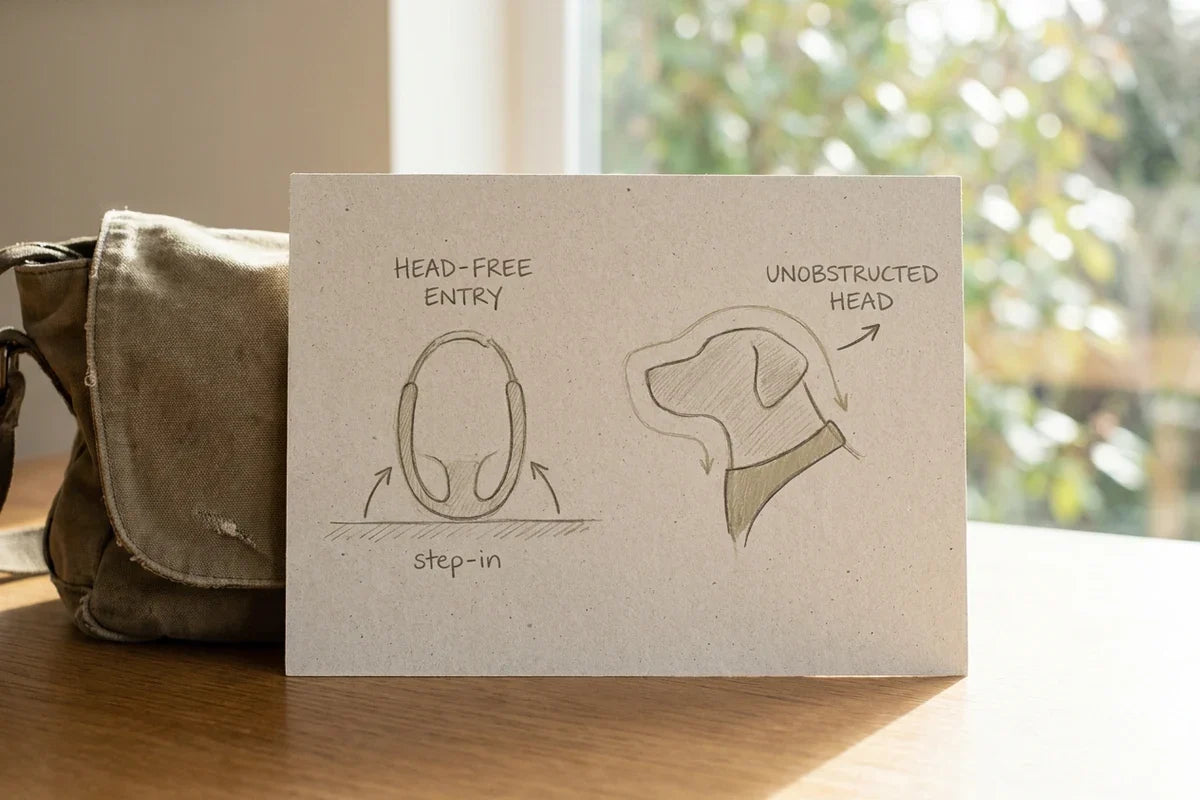
The best walking setup also needs to be manageable before you leave the house. Some dogs are comfortable with an opening passing over the face, while others respond better to a step-in style. If head handling is the sticking point, our guide to dog harnesses that don’t go over the head covers that choice in more detail.
Dogs that reverse direction and back away from their gear present a different shopping problem. Fit remains essential, but the design and closing method deserve closer attention too. Use our guide to harnesses dogs can’t easily slip out of when escape resistance matters as much as pulling control.
Check the Final Fit Before Going Far
Give the first fitting enough time to get each adjustment point centered. Make sure the straps lie flat, place the leash on the intended ring, and let your dog take a short walk where you can watch the harness from the front, side, and back. If it shifts toward the throat, rubs behind an elbow, or changes the dog’s stride, stop and adjust it before taking a longer walk.
That short trial is where a promising harness proves whether it belongs in your routine. Your dog should be able to stand, turn, and walk naturally while the harness remains snug and correctly positioned.
Frequently asked questions
Do No-Pull Dog Harnesses Stop Pulling Permanently?
No. A no-pull harness helps manage pulling during the walk, but it does not train the behavior away on its own. Use it as walking equipment while you consistently practice the leash habits you want.
Can a No-Pull Harness Also Be a Step-In Harness?
Yes. “No-pull” describes how the harness helps manage pulling, while “step-in” describes how you put it on. A single design can have both features.
Which Ring Should I Use on a Dual-Clip Harness?
Use the chest ring when you need directional help with pulling. The back ring may suit calmer walking. Always follow the instructions supplied with the specific harness.
Are Step-In Harnesses Suitable for Escape-Artist Dogs?
A properly fitted step-in harness can be harder for an escape-artist dog to get out of. It still needs to sit snugly, and the size must match the dog’s neck and chest proportions.