



Best Harness for Zipline Riding Dogs: Safety and Fit
The best harness for a zipline riding dog is not a standard walking or hiking harness. Unless the zipline operator and equipment manufacturer explicitly approve a canine restraint system for that exact setup, keep your dog off the line. For ground-level adventures, choose a secure, well-fitted harness based on your dog’s size, movement, and the kind of help you may need to provide.
Why an Everyday Harness Is Not Zipline Safety Equipment
A walking harness is designed to manage leash pressure around a dog’s torso. That does not make it suitable for aerial suspension, sudden drops, or fall arrest. Padding, wide straps, a sturdy-looking handle, and metal leash rings do not establish that a harness can safely support a suspended dog.
The zipline itself also needs more scrutiny than a smooth test run may suggest. A 2026 Consumer Product Safety Commission recall covered kits in which cables, turnbuckles, or seats could detach or break. The recalled brakes could also fail to slow riders adequately, and the design lacked an emergency brake. A dog harness cannot compensate for failed line hardware or inadequate braking.
Treat every manufacturer label according to the job it names. Walking, no-pull, hiking, mobility-assistance, emergency carry, and aerial suspension are different uses. If the instructions do not specifically authorize zipline use for a dog of your dog’s weight, the harness is not zipline equipment.
Choose Ground Adventure Gear by Its Real Job
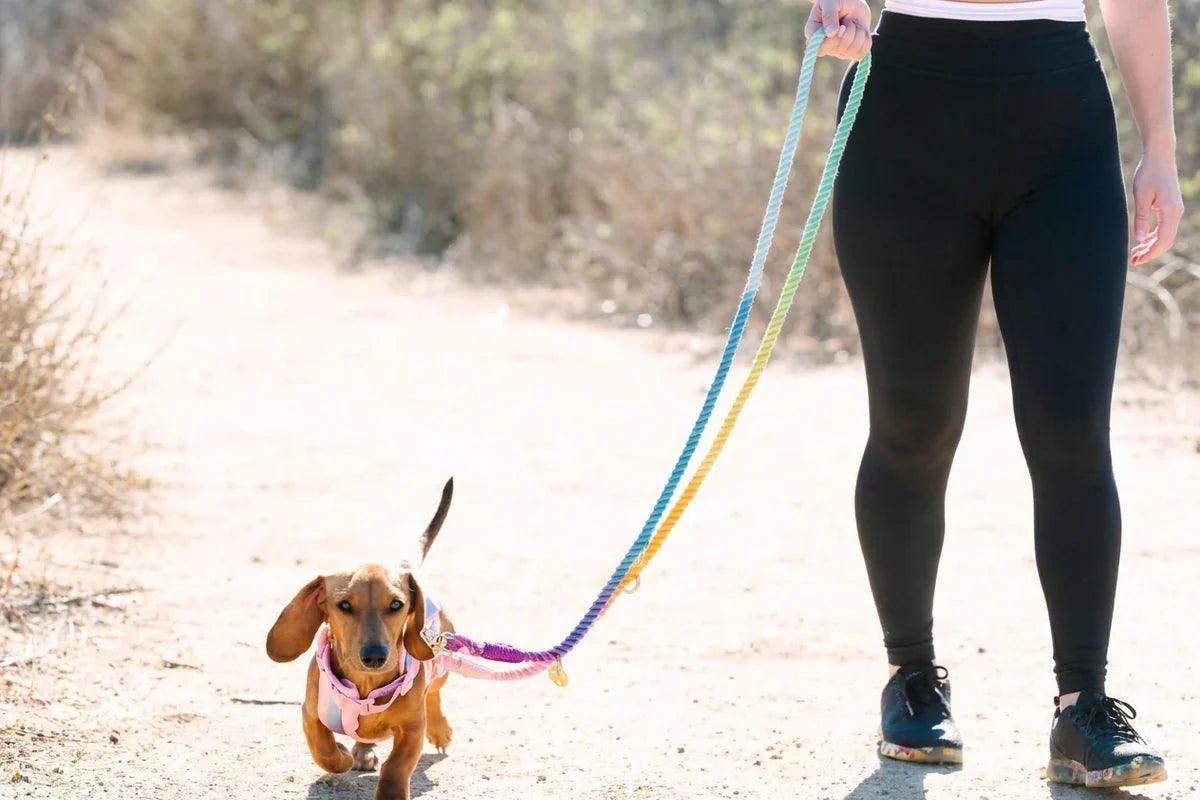
For hiking and ordinary outdoor activities, begin with fit rather than an impressive feature list. A dog harness should sit securely around the torso without pinching, shifting, or interfering with the front legs. Multiple adjustment areas can be especially useful when a dog’s neck and chest do not match one simple size label.
Your dog’s walking behavior narrows the choice further. A strong puller needs a different setup from a calm trail companion, so compare attachment positions and control options rather than choosing by appearance alone. Our guide to the best harnesses for dogs that pull covers that decision in more detail, while a no-pull dog harness collection gives you a focused place to compare that style.
Body size deserves its own consideration. Small dogs can have narrow proportions that make a loose opening easier to back through. Large dogs place more force on the gear and may need you to manage a much heavier body during an awkward moment. Use our guide to the best harnesses for small dogs or guide to the best harnesses for big dogs when those proportions are shaping your choice.
| Activity or Need | Harness Feature to Consider | Important Limit |
|---|---|---|
| Leashed hiking | Secure torso fit with free shoulder movement | A hiking label does not authorize suspension |
| Pulling on walks | An attachment layout intended for pulling management | Training and correct fitting still matter |
| Close assistance over obstacles | A conveniently positioned handle | Do not lift the full dog unless the maker permits it |
| Emergency evacuation | A purpose-built carry system that supports the body | Test the fitting process before an emergency |
| Winter walking | A harness that remains secure with the complete outfit | Coats must not hide the attachment point or alter fit |

Fit the Harness Before You Depend on It
A harness may place less pressure on the neck than a collar because pressure is distributed around the chest and shoulders. It still needs to stay snug without pinching or changing the dog’s gait. The AKC’s harness-fitting advice also emphasizes preventing the dog from wiggling out, which becomes especially important on uneven ground or around unfamiliar activity.
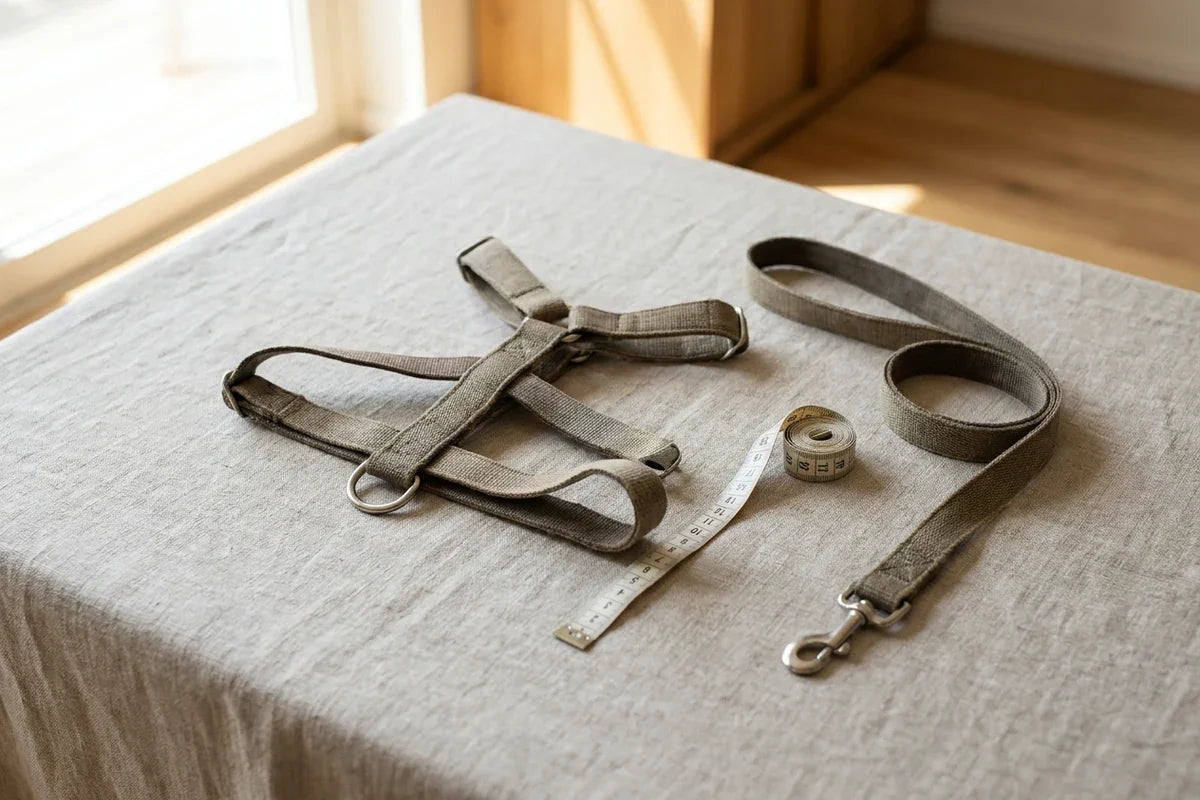
Put the harness on and check every contact area around the neck, chest, belly, and front legs. Then let your dog walk and turn naturally. Watch for straps sliding toward the throat, panels twisting sideways, shortened steps, or gaps that open when the dog backs up. If escape is the main concern, our guide to harnesses dogs can’t slip out of helps you focus on secure designs without overtightening the straps.
Check the fit again with the leash attached and gentle tension applied from the directions you normally encounter. A dog may stand neatly in loose gear while the entire harness shifts during movement. Resolve that problem at home, not beside a steep trail, crowded staging area, or unfamiliar obstacle.

Plan Emergency Assistance Separately
A dog harness with a handle can give you a convenient grip for close control or brief assistance. The handle alone does not confirm that the entire harness is designed to lift and transport an injured dog. Full-body carrying calls for equipment whose instructions specifically permit that use and explain how the dog’s weight should be supported.
Practice putting an emergency system on while your dog is calm. Learn where each section sits and whether you can manage the fasteners without asking the dog to step, jump, or hold an uncomfortable position. Store the system somewhere accessible rather than buried beneath the rest of your trail gear.
A multi-purpose harness can be sensible for walking, hiking, and supervised outings when its stated uses cover those activities. Emergency carrying and aerial restraint should remain separate decisions. One piece of gear does not become appropriate for every job because it has extra straps or hardware.

Adjust the Setup for Winter Activities
Cold-weather clothing can change how a familiar harness sits. If you use a dog vest harness with a coat, assemble the complete outfit before leaving home. Make sure the leash ring remains accessible, the coat does not bunch beneath a strap, and your dog can extend each front leg normally.
Do not leave additional slack simply because the dog is wearing winter layers. The harness still needs to prevent backing out, and the coat must work around that secure fit. Repeat the movement check whenever you change coats or your dog’s coat thickness changes with seasonal grooming.

Keep Active Gear Supervised
Extra handles, straps, and attachment points are useful only while you are paying attention to them. Tufts veterinary guidance on collars and harnesses advises close supervision when dogs play in their gear. Remove the harness when your dog is left unattended, then inspect the fit and fasteners before the next active outing.
Frequently asked questions
Can My Dog Ride in a Human Zipline Seat While Wearing a Walking Harness?
Do not assume a seat makes a walking harness suitable for zipline use. The operator and equipment manufacturer would need to approve the complete canine restraint setup for that exact line and dog. Without that approval, keep your dog on the ground.
Should I Size Up a Harness to Fit It Over a Winter Coat?
No. A larger harness can leave enough slack for shifting or escape. Fit the harness according to its instructions, then choose a compatible coat and confirm that the complete outfit allows normal movement.
Is a Back Handle Enough for Carrying an Injured Dog?
A handle by itself does not establish that the harness can support the dog’s full weight. Use a purpose-built emergency carry system whose manufacturer explicitly permits lifting and transporting a dog of that size.
Can the Same Harness Work for Walking and Hiking?
It can when the manufacturer permits both activities and the fit remains secure during the dog’s full range of movement. Reassess the setup when terrain, clothing, or the dog’s body size changes.